High and Low Sarah Willis is joined by Tony Halstead in a live Horn Hangout from Paxman’s in London. Tony and Sarah discuss the benefits of natural horn playing for modern horn players, hand technique, as well as some insights into Tony’s early playing career! London, May 17th 2016

Transcript
Auto-generated from the live stream, expect the occasional robot mishearing.
[Music] hi everybody welcome back to the horn Hangouts it’s a really special horn hangout here we are at paxman’s in London and I know Alexander we have to call them and say is it okay if we go to Paxman and they said it’s absolutely fine and they were happy we were here so just to clear that up in case anybody was wondering we’re at paxman’s we’re very grateful to them they’ve shut the shop actually for the afternoon and for tomorrow when the lso horn section will be here and um yeah if you hear some traffic noise it’s because we’re actually on the lower level and
The cars and taxis are going right above our heads up here so just so that you know welcome from all over the world once again you’re watching from America from Australia from Lithuania from from Germany it’s fantastic from New York thanks for joining in it was fun having you all there for the master class yesterday so enough talk
I would like to welcome it’s a very very special privilege for me today to have one of my absolute horn Legends he’s not going to like this cuz he doesn’t like it when when we make any sort of compliments but I don’t mind because today I’m just going to compliment in Tony house is one of my horn
Heroes we have a really long history together you’ve been very important welcome to the horn Hangouts Tony HED thank for inviting me Sarah I can hear Applause going on all over the world very happy to be here thank you thank you you and I met I’m not going to say how many years ago but do you remember
I remember um meeting you at the Claremont chairman music course in Isa run by Mari and friend Mar and friend our friend Mar and friend in case you’re watching Mari and we love you very inspirational lady and you were playing beautifully the brahs trio I was only I’d only think I just started was was I playing on that huge great beor huge
Vincent bark horn I remember that very clearly I and uh straight away I thought this young lady is going to go places oh well let’s let’s let’s get back on to you thank you for that but I remember you came and you actually you were you you you sat down at the piano and you showed The Pianist how to play it oh
I didn’t no but I just made a few suggestions that’s not many horn players can do that anyway since then we met and you became very important to me and that you were the reason I went to the Guild Hall to study with you and then you abandoned me I did not you did you moved to the hand horn oh yes well but then you played the hand horn and you played extremely well remember that no
I didn’t abandon let’s be clear I um I want to make it clear that I didn’t give up all my modern horn students lightly I I became very conscious at that time I was moving inexorably into the natural horn field and I I had severe self-doubts as to whether what I was teaching on the modern Hall was relevant anymore uh you know that that that’s what it was and the last let’s say the last five or six years that
I taught at the Guild Hall I did concentrate on the natural Hall that’s right I remember I was still very sad because uh you know you were my hero you still are my hero um but anyway we’ve known each other for a very long time it’s lovely to have this chance to chat um but let’s start because there a lot of everyone knows who you are but there’s not that much information about you online there’s not that many interviews so let’s just do a little brief uh this
Tony H said this is your life and you went to Chum’s School of Music Manchester and uh you studed the horn and piano though as well there I didn’t really study the Horn uh I he didn’t really study the horn no I I played the horn um in school orchestra I played a um a a peashooter you know
French French style pist and Horn the crook and I had one lesson when I was about 12 from the music master who was very multi-talented who gave me a fingering chart told me how to uh spit a note out and that that was just over to me when I left the cheatum I got into the College of
Music in Manchester what was then the royal royal Manchester it’s now that Royal Northern I got in as a peist not as a not as a horn player I was a second study horn player for the first year and then I was so shocked and disillusioned by my inability to play the piano as well as I wanted to
I then decided oh well I’d better be a horn player because there aren’t so many people playing the hor so that that kind of changed my life at but you’ve kept the piano up very much I think actually I’m busier as a Pianist now and half schist than I am as a h play but that but that’s my choice and after after studies you decided you’re going to be a horn player you went to the states no actually
I I didn’t um you meet my I I I met myON Bloom at one of two concerts which I attended in in in London and in Edinburgh at the festival when the Cleveland ORS were on tour I also was inspired by his uh playing on the various recordings with I thought you went to study with him well
I did study with him but I studied with him after he left Cleveland I went to Paris because he played Daniel Barb in Paris Orchestra and um and I used and I I went there on an irregular basis I mean it wasn’t formal study you know but he influenced you a lot he influenc me a lot yes yes yes
I um but before I met myON I’d already decided that what I heard of my own sound on the radio because I was in the BBC Scottish Orchestra then as the principal I didn’t like the tone I was making on my Alexander horn um and a friend dear friend of mine Martin Shilo the late s of the lso said to me
Tony you need to get away from me Alexander you need a large horn he said I’ve got one for sale it’s con so I bought it from him and that’s that was my regular day and so day-to-day horn for about well it has been for the last 50 years now your first job was the Bournemouth Symphony Orchestra fourth horn y bourou that’s great
I only stayed there three months but that’s why your low range is so good to this day well I’ve always been dare I say I I think I’m I’m a natural low player who’s always worked and actually dare I say struggled to play high you know I’m not a natural high player I just work very very hard but
I’ve always been happier playing low Parts I have to say that me too I know me too if uh you should have a look on online there’s a fantastic recording of Tony playing fat belly blues and if that’s not a mean low horn player I don’t know what is it’s a fantastic recording so you don’t like it when
I compliment you you go you’re very kind you are worth complimenting you really are um but we’ll get back to business so con D bour Symphony Orchestra um but you soon made the jump from fourth horn I don’t know promotion demotion fourth horn to solo horn to principal horn yeah that was in the BBC Scottish Orchestra um why did you do that if you felt more comfortable playing lwh horn because the the um my teacher in
Manchester Sydney kolston just said to me um I remember he always said that the first very meaningful telling thing he said to me in my first few lessons and he had a very broad Northern accent and after he heard me play a few for two three lessons he said Tony the trouble with you is your tone is too tubby tuby your tone is too tubby and so he was always trying to get me to slim out my sound um and when
I had Slim SED it out to the extent that he wanted me to he then said to me there’s a job going in the BBC Scottish orster farus C legendary farus and cousin were still first horn then he said you ought to go for that job I think you might have a chance of getting it so I did the audition they gave me a week’s trial and a week’s trial a week’s trial a week a week yes
I know that sounds horrendous to somebody in Germany two years we get a weeks TR and then they they offer the job so I stayed there I rapidly had to learn how to play high notes which I course and um after 3 years there I it was kind of time to move from Glasgow to London so came to the lso and
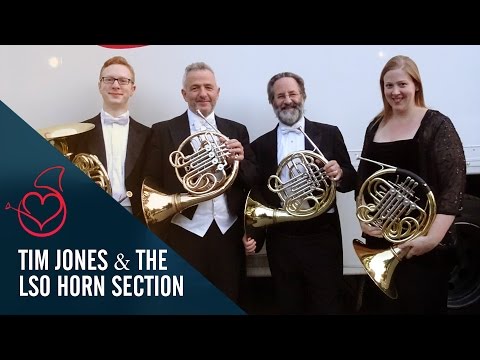
I joined the lso and I stayed there for three years we have actually a picture a couple of pictures Tim Tim is uh there’s no room in there’s no room in paxman’s to to set anything up CU it’s quite a small uh space here so Tim is squatting in the corner um we’ll have to take a picture of that and uh and prove it to you later so
Tim we have a couple of photos of Tony’s principal Horn of the lso um incredible job and tomorrow we have all the the members of Theo coming and a special guest coming to tell us about the history which I’m sure you can imagine who that is I think I know I I saw him last week we’ll keep it as a surprise until tomorrow okay but um how long were you there at the lso lso just a little bit more than three years that’s so did you feel happy as a principal horn in a big
Symphony Orchestra I felt happy that I was in an extraordinary brilliant orchestra that was a privilege um but if I was unhappy well let’s say I I became unhappy in the last year I was there because I became very strongly aware that physically I I don’t think although I love the repto I love the rman of the
Walton the vul the stuff that Andre prevan did so brilliantly I just felt increasingly that physically I was not suited to that style style was that you worrying too much I think maybe it was yes and uh when when Jeff Bryant joined the orchestra as co-principal Hall and I used to bump him up I used to think hm well he’s just a much more accomplished
Symphony Orchestra home player than I am and I thought well I I want to leave this Orchestra and do something which I think I can do hope I can do you know better than I’m doing now so as soon as I left the lso within about 2 weeks I joined the English chamber orchestra and stayed there for nearly 15 years 14 and a half 15 years and that’s where
I think um I it was like my life changed and I became aware of the whole chamber or came Orchestra repertoire particularly the uh brilliant hid and syes which I love to this day and I I love conducting them as well in fact that’s my next big project in June at the English heyen Festival conducting Heiden and other classical pieces but the
Eco allowed me to find my feet and they also let me play HS Accord in some rock music and uh you were the Eco conducted played the horn played the harps the cord but you did feel a lot I remember I I’d Met You by then and and you did feel really a lot more comfortable you told me in in that rep in that repertoire and chamber music but some people would say that repertoire is much more open much more uh fragile and
I remember these hide and Symphonies there the recordings of you with the Eco play these the what are they the later hide and symph really high ones yes um I think for me the the the the recordings that I’ve enjoyed most I mean EO was wonderful but when I moved away into the natural horn world it was the my association with the
English concert perod instruments and the Academy vention Music and the Han of the band those three orchestras where I it became very crystal clear to me that using High crooks on the natural horn actually slim down the texture no longer were the horns having to play soft you you didn’t see the conductor’s hand going up like this you know the
Dre simply play playing an a an a crook a g crook have to because the sound is so much Slimmer using the natural horn the smaller Bell so it’s immediately it wasn’t too tuby no too tubby no so the horn fits in using the natural horn and you know I hate to say it but playing a mo hideen
Symphony on a B flat Alto or a crook it’s actually easier than playing it on the second valve of a large double horn we played this thing with Simon Rattle recently he made it this sort of pastio from all sorts of hiding things and one of them Chef Andor and I thought we were going to have a nice easy time cuz it was be flat and it was no problem and we got to the first rehearsal and
Simon said uhuh horns up there and it ruined our week CU it was really high and we were saying exactly that we were finding it very hard to blend in on our on our horns on your you know and Simon doesn’t do that very often but you could tell he wanted to what do you remember what the what was that particular piece something he he put together all these he’s made this this this
I’ll find out for you because if it was one of heiden’s London s if if no no it was something that we’d never heard of it’s on the digital conert if anyone knows what I’m talking about maybe you can write in there was this this hide and pastio and yeah I it was yeah it was it was a tough thing especially for a poor little low horn player
Tony before we get onto your move onto the natural horn I have a few questions because I love to get to involve our audience we have some really sometimes I’ll just just fire them out Ollie Johnson who um is a horn player at guil who came to our um our class yesterday guil that’s right Joel isn’t it um he says what exercise did you practice to learn to play high did you relate did you relate playing to whistling or something yes whistling is that’s very very good
Ali extremely intelligent um remark um when when you reach the point when you can’t you can’t really I I I hate to use the phrase tense your lips up because I I firmly believe that everything around the lips uh should become firmer and firmer but if you start getting too tense in the lips then then the lip stops vibrating um
I won’t digress for the moment but you ought to read the hanging lip by Fred Fox which is a brilliant article he he talks about the hanging lip uh and being free to vibrate okay coming back to the point there comes a point when you can’t become more tense in the musculature at that point you start to use the whistle technique so using the position of the tongue in the mouth you’re compressing the
Airstream you’re making the air go faster in a natural way and I’m not saying hey press so easy but it’s a a way to work on getting higher notes out than you thought were possible fantastic yeah so thank you for asking that question no thank you for that um uh what hang on sorry I just this I’ve got a mini iPad today um
Jill Williams a friend of friend of ours mberg I was just telling about her Australian uh horn player just got principal horn well done Jill congratulations um how important do you think for it is for young hornest today to learn early instruments and also the hand horn technique on a modern instrument very very good question we’ll get on to hand torn more in a minute but
I love that question yeah um can we spread that a bit wider and make it not just young players it’s important I think for any horn player um to spend a period of study months years um I mean I although I don’t really play the natural professionally anymore I’m still a student of anyway coming back to to
Jill it’s important in that I can swear on on the Bible that I’ve never had a a student either a young player or Advanced player professional player never had a player who’s not been s double negative I’ve always had players who have improved students who have improved in their modern playing as a result of devoting time to study on the natural horn
I mean it’s all over to you it’s over to your lips and hand technique um the um while we’re still in the modern world one of the part from Baron blue one of the most inspirational figures in in my life as a player um was Barry tuckwell sitting next to Barry the very often well no not in the lso
Because by the time I left the lso Barry had left when I joined the ls it was David Gray was the first hor I was co-principal when David left I became principal and then Jeff BR joined okay Barry you was is I know I think he still plays used more hand technique on the modern horn than any horn player
I’ve ever played with I it was a great privilege for me to sit occasionally and play second horn to Barry in the London symona and obviously you don’t you don’t glare at somebody like that but just out peripheral vision just seeing what he was doing with his hand shading the sound all the time I found that really fascinating
I think it’s so important I I always say mother hand it’s such an important tool and to have learn from from you what actually how to play the notes and how it used to be has really helped being a second horn player and being able to adjust it that that’s in Split seconds it also helps your hand position doesn’t it because if you have a fun an odd hand position on the modern horn you can’t play the natural horn no not not at all no no and there’s something else that maybe young players don’t realize and
I’m I’m not blaming teachers for this but uh there’s an area of high register on the modern horn which does not come into Focus unless your hand is correctly placed in the Bell and the usual um what’s the the fault most usual most often is that the fingertips are not far enough up the Bell throat as soon as you find that magic spot where you feel your fingertips tingling at that point you’ve got access to some higher harmonics than you think you can get how far up would that be contextual
I knew that would come in the question contextual yes um it’s hard to say it’s very hard to say but um years ago the the great the late American Musical physicist art benade wrote a book in which he mentions finding the correct hand position you can actually feel um if if you say even a middle note see about middle see there comes a point if you start to gradually
Slide the hand into the Bell where you feel that tingling in your fingertips and that is the spot where the hand will perform its functions most efficiently it’s also such a natural thing as you see people doing this and people doing this and people doing this it’s actually you put your hand in the Bell you You’ got it that that
I learned it from you I learned it from you he would say that wouldn’t no it’s it’s really because and also to learn the natural hor I didn’t play it for very long but my natural horn is in the horn room at the fil and it’s used by everybody in Berlin who has to play the Britain or or you have to use it in the orchestra everyone always wants to borrow my
Tony chadel um holstead CH Hol holstead web horn late John webel mouth mouth pieces oh did he pass one John web passed away last well in fact in 2014 he did and I went to his funeral which was which was as as as happy and Affair as funerals can be and John Wallace who who played some of his trumpets
John came and played the movement of the HL and I accompanied him on the electric piano how lovely I’m honored to have it was one of the first horns I think you built the one I yeah yours was one of the early ones with a with a hand Hammer belt and that huge great big case big wooden box yeah um anyway uh
Tracy asked did Anthony play the con 8D in the lso you did oh indeed oh yes you did didn’t you um so let me just see it needs a refresh there we go gosh you everyone’s being very very uh it’s for they love it it’s going on really um um great question when when did you realize from
Thomas shat when did you realize you were a lwh horn player and focus your efforts on that rather than trying for high instead well you actually I don’t quite understand that you were you you were a low horn player you felt comfortable but you had to work very hard at being a high horn player it became very clear to me during my second year at music college that
I didn’t really have a very natural on on bour for for high register I had a lot of an enormous amount of upper lip in the mouthpiece I think even to this day in rather than 1/3 the classic 1/3 2/3 uh uh proportional of mouthpiece I’ve probably got four fifths 1 which is probably not enough I think if
I could that’s very unext book isn’t it yeah if I could I think if IID managed to get 3/4s and 3/4s top quarter bottom probably I would have had a better High register when we now we’re on the mouth a mouthpiece question always comes what sort of mouthpiece do you play on but um it’s more than just a question for you because you and
Tony chadel you um you developed the set of screw were you the first people with the screw no no actually um the the so-called phc Paxman H to jell which has now been Rec christened professional horn components um yeah that that that that’s true anyway let’s stay with this when Tony and I were in the lso together
Tony was my second home and um we had got a bit fed up with having jardelli screw mouthpieces gouged out and widened because we felt that there were great mouthpieces but for both of us we felt that we wanted more sorry about that Guys these are motorbikes going behind going out here sorry about that okay so we we we used to tweak modify customize janelli mouthpieces so that they had a wider internal diameter the widest
Jordan a that was available in the early 1970s was 18 mm inside and we wanted something a bit bigger and so we got to the point where we couldn’t carve out anymore from a John La mouthpiece and we um in collaboration with with Paxman and some very skillful Engineers we came out with initially a range of only two rims and two cups which eventually expanded and those had 18 and a half internal diameter didn’t suit all players they weren’t claimed to be the univer
Universal be be all and end all they were specifically aimed at players who wanted larger inside diameters than we could get from jordanis that’s and the rims you had a select I remember starting off on one that I felt was like pretty much a tuba a tuba rim and we went down from that I did I did play on one for a while yes um the wi we did you have various various rooms how does it work now what what is available now oh now um about 2,000 different different combinations
I mean I I don’t off the top of my head um I don’t I’m no longer since about 5 years ago I no longer have a business involvement with PhD math pces but I’m obviously I take an interest in in how they’re still developing um did they take off when you developed them oh yes very much um but they only took off when we kept we brought out an alternative range called the a range which were more conventional inside diameter for example the a range mouth piece all the a-range rims are 17 and a half now most of the normal size paxim math pieces 4
B 4 4 C are roughly that size no 17 and a half it’s getting very technical this isn’t no but well we’re getting back onto the story but I promise you that everybody watching loves it was something that I wanted to ask anyway because it’s important to have this information out there because a lot of people watching don’t have they can’t come into
Paxon and try the try the mouth pieces well no my latest information on the health of phc mouthpieces from only a week ago from the um the machine shop that makes them on the south coast of the UK is that they are still available and there’s been a rumor flying around in the last month or so that phc mouth pieces are not available anymore and that is actually not true good because you can still get them every single model is still available you have heard that on the horn
Hangouts you can order your mouthpieces if you want rumors are not true um Tony let’s go back to to you you um you made the the the change the the move into the Eco and how did this evolve this absolute passion about the natural horn because there was nowadays we have the Hanover band we have the Age of
Enlightenment we have I mean everybody’s doing it but in those days nobody was doing it as far as I know how did that evolve okay well I to be absolutely honest in the middle 1980s um I became very aware that some of my colleagues were playing the natural horn extremely well Tim Brown Michael Thompson and um I used to work with those guys and
I thought well I’d like to do that as well so I let me just make one thing straight I’m not a Pioneer I mean the the most life-changing natural horn recording I ever heard was the legend the pioneering Herman Bowman of the four mozarts con with the Nicholas aror and the the vi concentus music just superb natural home playing lyrical beautiful and
I just thought I want to play like that and uh so I started messing around converting piston horns and stuff like that when Paxman brought out their first natural horn in 1982 I think I bought the second one I think Mike Thompson had the first one I bought number two and that you still have it no I don’t have it
I’m afraid uh I it it wore out used it so much um and um that’s the one I used for my first recording of the moar keros with the Han of band and my recording of the vapor horn ktina um your mozar and shadows we have a photo of you recording the Mozart horn keros on your natural horn 1987 uh yes my goodness yeah yeah well oh you’ve got your facts right we sometimes do too have you got that photo somewhere is it going up fantastic wearing a red jumper wearing a red jumper and looking ter terbly serious is almost the hoffnung cartoon look you
Know you were doing doing this fantastic may I just say for the record you’re going to squirm again these are for me the ultimate Mozart horen sherter recordings they have been my guide yeah I and I’m not just but I did them better with Chris hogwood and the Academy of venture music in 1993 did well you you did your recordings of the
Mozart your interpretation of the Mozart you did the maybe for you better both of these recordings that it’s how you play I mean it’s um you Chang the Cadenza a little bit in the in the in the hogwood recordings um which I actually preferred those I like those ones they were quite quite daring ones um but really
I Abs if anyone any of you haven’t heard these natural horn recordings actually both can you still get both I’m not sure if you can still get the one the Hann a band on the Nimbus label certainly you can get the ones with with the late lamented Chris hogwood and academ Mission but that’s on Deca any horn students who have not any horn players any
Viola players or whoever we’re watching whoever are watching if you haven’t heard these please go and listen to them because they are stunning and what I love about your hand horn technique Tony is you don’t go you don’t play hand horn like that you don’t play the stop notes as if they only for effect sometimes when they need to be why that’s very perceptive of you you know funny enough what you just said that’s what
I try to do and yet I’ve been criticized for not punching out the stop notes enough for not drawing attention to them um it’s such a contextual thing Sarah that that when when when the lyrical line would be interrupted by a pungent stop note what natural horn players tried to do is to disguise that to to play the stop note a little softer make a slightly more open hand position at the same time lip down the more open hand position is the sharer it’s going to be so you you put you make your hand more open you lip that note down and then if you
Go too far you crack it but um but there are instances where you’ve got to exaggerate the for example that dramatic moment in the slow movement of moot of of K 447 I won’t call it number three although it is number three um you know all the numberings been been been revised and what we think of is number one is really number four
Etc so it’s got to be like that yeah because it’s a tense harmonic moment look at what the orchestra is doing you’ve got an E flat in the base you’ve got a cord of e major it’s not notated e major it’s not notated F flat major with with E flat in the base it’s got to be tense mean and the
I think by by ring that stop note you’re enhancing the tension of that of that well there is is there a swart SLE written on there so that’s probably what most intended but not everybody who plays the natural horn thinks like that they like to stop everything that is a full stop and I I I love I love that way of playing
I don’t like I mean your way of playing thank you thank you very much but I that is something very important to learn because I I learned from you to play like that with you know sort of I remember your circles and your half C half crosses squares I still have them on my mot and um and that actually made my that’s why it’s called hand technique of course isn’t it because if it wasn’t it the hand technique would be open or stopped yeah it’s
It’s So Many Shades of Gray in it I mean it’s I really don’t have to say I don’t like hearing what I call Black and White Hand horn playing it doesn’t do anything for me well the other thing I’ve always wondered I never got a chance to ask you how on Earth did you play the vabra conino like that on a handorn with all those incredibly fast notes that is a legendary recording
Goodness Me has anybody ever tried to do that oh Hector McDonald has done it has he I’m sure it’s great Hector did it and he did all the repeats and the variations which I didn’t think I had the strength for but um it’s these days you could have just repeated what you recorded and then cut it in there yeah maybe no
I mean I I will tell you preparing when I prepared that piece I remember it was the Autumn of 1986 I did the most concentrated three month practice I’ve ever done in my life um I had a kind of psychological barrier block about the vutino because when I was studying at college with Sydney couston in Manchester I
I learned off the Oto langi tutor for quite a lot of the time and I used to appear in the back of the long Lang yes Lang I’ve never even seen is it still available probably still is in a reprint L please everybody links the Lang the langy tutor so you appear in the back of the tutor and you see um andan
Ronda by reaga or something like that and nobody plays it anymore but it’s a nice piece and then you come to the V conino so I said to Mr Kon Sydney one day I’d like to play this piece L don’t do that he said I said why not he said Denis brain wouldn’t play that piece you that
I mean I don’t know Dennis must have played it but Sydney was convinced that Dennis never never played that piece so I thought well that’s it I never play that piece and then years and years later when the manager of the Hanah band said to me on the phone can you play the baby ktina and I said no and he said could you learn to play the very so
I said I’ll let you know in a few days so I started practicing it and I spent 3 months of my life for playing that nothing else but that piece every day uh and there was no recording plan it was for a concert in London Smith Square so we did the concert and I kind of got through it and then two days later we were recording the vapor symph the
Symphonies Symphony 1 Symphony 2 um and the recording team realized that Symphony 1 Symphony 2 are not really long enough to make a CD I think there was a there’s no Abu Hassan which only lasts about 3 minutes so they they said to me on the second day of recording would you like to record the fautino so fortunately
I had the E crook with me although that repertoire doesn’t leave the E so they said we’ve got two hours to do it we start now so started and I said well I’m not going to be able to do the the legendary Nimbus philosophy of one continuous take you’re going to have to edit guys and they said all right so be it so and
I did have eight no seven attempts at the high e which is off my range at the end and I think two out of the seven were usable so thank goodness they Ed they Ed one of those just totally is I mean these days you know a year in advance if you’re doing recording yeah they just told you on the on the day before by the way you’re on well it was on the morning it was on the
Sunday morning at half 10 the recording session was due to start at 11:00 so they said we’re going to record from 11: till 1: you’re either going to get it in the can or not so so we just did it good he had the music well the orchestra still had the music as well yes anyway and the crook incredible get this recording guys this is really absolutely incredible the cords are not as good as
I mean I I I know personally uh at least three or four who can do the singing because partly because the the people that I know I think have better trained singing voices than I have is it true that it’s I find it hard to sing that is it because it’s a girl’s voice a girl’s range is it how does anakah do it well you you don’t sing the low
Lo no no but it’s still I still find that very hard although last week I was working with Pip stop and he played one of his own compositions in which he was singing lower than the note that he played so I I don’t understand that pip is a force pip is really I think pip should record The
Vapor cono okay pip if you’re watching this you’ve been challenged it’s a horn challenge we’re challenging you to record The Vapor conino yes right you conducted Pip’s umart yes yes with the Han a band with the Han band great fun wonderful recording as well but his censers they hair racing I mean did you write them no he wrote them he wrote right okay
I remember when I heard them I thought sounds like Tony’s actually no way I mean no s but kind of I wish I wish I had the the ability to play those censers that he won’t we we did have a few good natured I wouldn’t say arguments we had discussions a Frank and free sharing of views about the censers argum yeah and pip was remained absolutely convinced that he wanted to play you know because they they grew out of his study some of them grew out of his study of the moart moart panican
Church of censers which he wrote himself I mean if you look at all mo Arts piano con J cadenzas you see he uses diminish 7ths a lot and pit thought well why can’t we make diminish sths work on the horn and my goodness he makes them work yeah not to mention the stratospheric no I will mention the stratospheric high which are superb it’s it’s a wonderful recording um
I’ve got a good question here from Thomas again he’s coming Thomas you got good questions today um you said that playing the natural horn improved the technique of many of your students your your um your modern modern horn and elaborated on the hand Hornet technique but what way is it but in what way is it beneficial to lip or tongue technique lip or tongue technique well lip why is it good for your horn playing not only the hand technique but why all right uh let let’s do those in two parts lip technique meaning the ability for the
Ure to focus on the pcture of the note that you want to come out of the horn well um to to some extent when you put down first Val second valve on the modern horn you’re you’re having some of the work the hard workare already done for you you’ve been you select um second valve you’re going to get harmonic on the
B flat horn harmonic series of a on the F horn Harmon series of e um when you’ve got the the crook when youve got a crook in the horn you don’t have a mechanical Aid you you’re not constantly adjusting the the uh the resistance what the modern horn does for us is it gives us an enormous range of different resistances which by practice we learn how to cope with so you know you switch from first valve and then then go to
Val 2 and three you’re suddenly going from the a flat horn to the FP horn much more resistance have you ever wondered why sometimes the C sh has a little bubble on it because in the whole gamut of the B flat horn that’s the longest tube you use two and three and the thumb BS as well so coming back to uh so the you in other words your lips have to make the pitch and you get no help from the instrument at all that’s number one tongue technique that’s a rather subtle question um
I think I can answer that by saying anybody who’s ever played a Mozart symphony say in f um and you get going nicely in the first movement and it feels nice and free on the on the natural on the F crook you then change to the slow movement you put your C basso Crook in and you’ve got a written
C on the page and you go and it goes so in other words the you you the the tongue technique that you require for the longer cups I mean C basso B flat basso you have to cultivate especially if you’re using a modern mouthpiece you have to cultivate what I call a back of the mouth technique so you’re really stroking the note into place if you use what
I call full forward frontal tongue technique on the B flat basso crook B natural basso of course and C basso you’re going to get some split notes crack notes uh if you’ve not got the air speed absolutely lined up with the speed of the tongue but doing that back of the mouth technique which is a sort of valid something that cornet players do and you can hear some marvelous leading home player leading cornet players playing with with not so much frontal technique as the
Cornet solos of the past I’ve digressed onto cornet now but I think the Cornet has such a relation to the French horn as it and I just love the Cornet far more than the trumpet oh there we are I Tony we have incredible celebrities watching us today hi from Tim Jones richel Bissell David Patt pip East Martin
Owen in the middle of a film session recording Disney film score how about that hello boys wish I was there thank you for watching I hope pip heard his shout out someone’s just suggested we need pip on a hangout which is uh you do we do we need actually all of these boys on a hangout um we have
Tim Jones on tomorrow and all of his section which is great so go back to work boys get the teas in we’re having Paxman tea Tim nice mugs so tea break you have to drink tea in London isn’t that funny don’t you just love the W of modern technology so um there was uh Philip Maguire is watching from
Oman saying so lovely to see Tony from AAR in inspiration to all UK players Trevor says Nimbus recording is my favorite CD Matthew Clifford High slip says huge fan I the pinck Royal fireworks music sounds like you had a lot of fun recording it I mean it’s you’ve got a lot of people out there in the world that that truly truly adore you that touches me so
I’m so happy that you made made the trip down here or up here hang on where where you live we’re down we’re down here in pxton but where do you you live I live in DOA DOA so that’s up you came up that’s I came up yes yes and I had a concert this morning in Canterbury where
I was playing the piano I just looking at the your CL yes how much how much accompanying do you do these days well more than I used to um uh once again how long is piece of string I’m very happy to um have a go some of the standard accompaniments for not only horn but also other wind instruments when
I was at College I used to love accompany mostly wind instruments but um I in the last five or 10 years I’ve tried to learn some of the piano parts of the string accompaniments I mean my wife Ellen is a violinist and although she does concentrate more on the um the classical and Baro done the modern you met in the in the met in the
Guild in the guild that’s right I was her accompanist in the guild you’ve got an amazing memory hello Ellen is she watching I probably she can’t be watching I think she’s working today there we are a big hello from all the horn students at the Birmingham conservat a Great Horn hangout Robbie King wrote that in um Andre and
Watford Andre is a Great Horn hangout uh um horn hangout supporter so hi to Andre um Freya Gillan hello from Trinity uh laa conservat Tony I’m a key natural horn player and I’ve been wondering what the best way is to start getting Barack orchestral experience while still a student Orchestra oh what a difficult question because I remember the first gig you sent me to my very first gig it was in some
Cathedral somewhere with I packed my horn got into my little mini drove off there had practiced the part and I was lost my ear it kept changing it was just so difficult to hear and even though I practiced was it barck pitch was it lower the lower pitch semi turn down semi turn down you get used to it the pitch that
I’ve always found hard to cope with is that in between pitch which is so-call classical pitch which is in the cracks between Barac and modern so a430 which actually I think is a madeup pitch uh Honestly made it up well at some point when what I call the explosion of um authentic performance and authentic orchestras happened in the early mid uh 1980s
I’m convinced that some Consortium of orchestral managers orchestral conductors recording companies got together and thought we’ve got to have a pitch now for not for Barack but for mozar and Heiden so why don’t we just settle on 4:30 because certain instruments sound okay at 4:30 but you find you uh defy anybody to find me an original classical handorn that comfortably plays as low as 430 pretty well all the ones
I know are quite happy at 435 and a bit higher 4:30 you have to have the slide out so far that you start to get bad notes so that that is a little internal of that anyway back to the questional EXP oral experience well um I I’m pretty convinced these days that that the various British conservat do have um
Barack instruments say Barack you know those the um the the preand horn and they have hand horns as well and do these places not have little their own Barack orchestras I hope I hope so it would be it would be lovely if they did that’s where get let us know Freya if if you Freya if you let us know fre fre
Gill I I sold her a horn I sold her a horn you sold her I hope you like your horn Freya I hope it was really expensive yeah hello Freya but um it is you know one thing that I think is fantastic I was filming with the Cold Stream guards with the band of the Cold Stream guards last week and they have
Wonder a wonderful horn section and one of them runs the original instruments band of the Cold Stream guards they have an original instrument band they play they play on natural horns it’s incredible I think it’s a great great idea and they get all dressed up in the uniform of the old days it’s hard enough to march with a normal
French home which I discovered um let lo I sent him a email last week Nick Nick telling him to get um a coupler so he could put his D crook into into see basa that was what it hello Nick if you’re watching yeah hello Nick I hope he is I’ll see him on Friday I’m going back there um you say you’re not a
Pioneer but you absolutely are you absolutely are this this this natural and you’ve taught all the top natural horn players of today not all of them some some of them Roger mcgomery um who else Andrew Clark R um a whole list of them they were all your pupils I I decided to stick with the modern horn because
I I this pitch thing really I found that very difficult but um I think it’s it was absolutely wonderful to have this chance to learn the natural horn and I think it’s something every every student every horn player should know how to do I app how can you play be over 9 fourth horn solo without knowing how it would sound with the hand technique yeah that’s very astute astute thank you so much
H they called many things astute was um JN Jones has written in saying he still loves your sport octet which we played for fun in glasgow’s in the late 60s goodness yes that’s true yes John Jones you see isn’t it incredible what sort of that was not on the natural horn that was on the modern there’s people watching all over um oh and there’s uh
Becky Parkin is watching and what’s any tips for practicing her low register she’s a natural high horn player so she’s the opposite of what we are right so what would you what would you practice for your low range these days for these days um first of all I’m a great believer in uh the the jaw lowering technique where you you bend the pitch of a middle note without changing the fingering so you start off a middle sea with a strong
Airstream and using the jaw you you do a yawning technique so you’re you’re keeping your lips together if you go too far with it you must be careful that you don’t pull your bottom lip out of the mouthpiece but you undulate mid oh on do that get that really going a semitone undulation factitious note play the btho
Sonata on the hand horn and in fact I was teaching somebody yesterday you play the last movement you play g g c c b hand doesn’t do it at all you’ve got to you’ve got to draw it down draw the be down and then you’ve already started practicing the mechanism for uh for strengthening the low register so you’re using the jaw to pull the pitch down sem a bit more the
SEI Zone if you can keep pulling down bang then the G low G comes out that’s a good solid note then you start again on the G you should get on the say the E flat cro maybe not on the F cro you should oh we’re talking about model but that’s fine that works on both don’t you think
I mean you practice that on the F4 anyway so you bend the middle SE and then miraculously you you suddenly thought the the if you keep the good strong Airstream going you get the next harmonic down which comes out as a good stable what’s happened is that the jaw has guided the Ure into the correct or the most efficient vibrating slot to get that low note which you thought you couldn’t get so
I I just work my way down through the semi turns doing that working down until you’ve actually got the jaw taking you down much lower than you thought you could on your fat belly Blues you can really see you have a real why you really get down there I I find out I can’t I can’t well everyone does their own way but uh well you know that’s that’s maybe that’s a rather debased technique these days and every time
I open a new textbook on it I mean particular one which stays in my my mind is the one by Vern Reynolds the horn handbook which is a great book in which he he says he alleges and I think he’s correct that the ideal should be to play as low as you can with an omers show that looks like a high omers show and conversity to play as high as you can on a on an
OM show that looks like a low oners show I’m not saying you should have two ures that was something that I went through I remember in my second year of college uh I said to Mr kolston I want to be a low player and he said lad you’ve got you got two different ures youve got a high
Ure and a low Ure he put said play this down he put the um the the second horn solo from fidelo on the stand and I kind of went change the mouthpiece and he said right go and practice use your low omers Shure to get high and you you’ll be a low player but don’t come back here with two omers shures anymore it doesn’t work so so that that that taught me a lesson so but that that pulling down the corners
I think you can carry that too far I think you should keep your Corners firm but maybe not I don’t think i’ do that anymore oh there we are fascinating Tony we unfortunately you’re out of time sorry for all all the questions we didn’t get to Tony will be getting a copy of the right there’s no one there it’s just a camera um
Tony will be uh we’ll send him a copy of the chat so he can see everyone who’s written in and everyone who’s um who said hi and asked questions so you’ll be seeing that so write in for him send him your hellos tell us where you’re watching from any selfies you can take of you where you’re watching with ashorn hangout we would love to see them um
Tony what what what’s on the what what are your plans now I mean I don’t mean today but no no no as I said the my next big project is to is to um conduct four concerts in the lovely Market town of bridge north shopshire where there’s this fantastic Festival the hi English hidden Festival which has been going for 20 years and um
I I’m privileged to be able to conduct U the the orchestra that assembles there and doing hide and Symphonies we’re doing a couple of bet as well including number two so for players start practicing now um and we’re doing various concheros we’re going to do the remarkably wonderful vber bassum conchetto with the marvelous Robert peral playing with soon
I mean I I feel so lucky I’ve got I’ve got projects like that um I I’ve got this horn ensemble which I was working with last week called the Tony Holsted horn ensemble in Cambridge um and we did two wonderful concerts last week with World premieres of sensationally good works by Richard where the horn players come from well some of them come from
London but mostly there C home players from around the Cambridge area and they’re really enthusiastic and really good and we had pip there we did Tim Jackson’s superb speedle strook which was commissioned by the by the whole ensemble and we also did Richard Richard pistol’s piece the Magnificent seventh when guess what interval it’s based on so that was a superb privilege so last week
I’m was was a big big big week for me anyway you said looking on um I I just want to be able to still love music enjoy making music um I’m not playing the horn at the moment because a bit of a tummy thing but um I’m hoping to start playing again very soon as well Tony you’ve given us so much really you’ve inspired so many people and
I when you wrote and said you would come on the horn Hangouts I just just cheered because it’s something I wanted to remember we tried to set it up a couple of years ago and it didn’t but I was then I you were yeah that’s right so but uh but I’m I’m so thrilled to to be here thank you for asking me and uh and also thank you to the people who’ve asked such good perceptive questions and
I hope I haven’t uh obfuscated so much too much I don’t even know what that means in other words I haven’t beat I hope I haven’t beat around the bush too much I have tried to answer the questions as well as I can you really have well um long may you carry on doing what you do and um thank you for all the inspiration all the all the thanks are coming in here from the from from the from the uh lee
Alexander also a great hangout supporters I’ve always loved Mr H’s recordings and I see now he is a lovely man and so generous to share his knowledge thank you so so much could you tell my wife that eor Patrick great hangout thanks so much Jeremy row great hangout thanks so much the you will get you will get a list of all these so um thank you for coming thank you so much
Tony H thanks for coming one Hangouts bye-bye everybody we will see you back here at paxman’s tomorrow at the same time with the horn section of the London Symphony Orchestra and a few surpris is um thank thanks to Joel for managing our chat I will be I’m taking a picture of these to thanks for Tim on his knees here um
I will you have to see this to believe it and the packman staff at the back Martin and Ian you want to come say hello oh they don’t want to come say hello come and say hello tomorrow there’re you sure you don’t want to come and say hello all right no they don’t want to come and say hello um but they’re they’re back there and it’s it’s quite small in here but it’s very cozy thanks for all to you for watching and um
I’m just going to give tony a hug and Say Goodbye see you tomorrow thank you sir [Music]
Horn Hangouts are created by Sarah Willis of the Berlin Philharmonic. Brassbanned is a proud long-time collaborator and streaming partner.