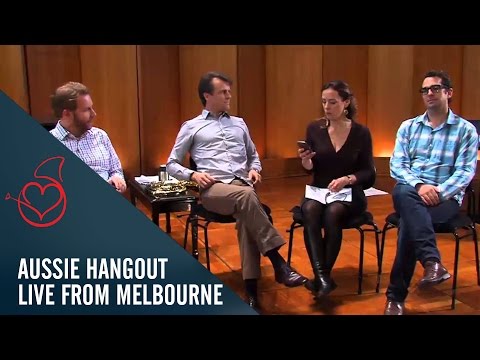
Frøydis Ree Wekre talks to Sarah Willis live from Norway on the Horn Hangouts about teaching, intonation, whistling and buzzing at bus stops…with special guest Fergus McWilliam! Live Interview January 24th, 2013

Transcript
Auto-generated from the live stream, expect the occasional robot mishearing.
Really great you’ve joined us today I’ve been really enjoying the the comments about the weather that you’ve been sending in from all around the world from England from Spain from Melbourne everywhere here in Berlin it’s freezing cold and in Norway it’s pretty cold too and I’m so happy and honored to a table to welcome okay here we go fry just fry this ray yeah did
I say that right oh very close to the horn hangouts everybody’s been waiting for you to come you’ve been right on the top of the list of the guests we’ve wanted to invite so thank you so much how do we pronounce your name exactly well in Norway it is pronounced thoroughly this in a minute but you know
I’m used to the warm air conversion Fridays how are you Freud yes okay rainy did ray vikre what thank you that’s good everybody at home all together provided ray Voeckler they get all these home players practicing your name and tell me the other thing this has nothing to do with horn playing whatsoever when I write your name you have an
O with a slash in it how the heck do you find out on a computer I couldn’t find it usually it’s only in Scandinavia it’s it’s it’s similar to the German over there with aluminum oh yeah same thing litter it’s just as kind of naming way all right innit so what happens if I don’t use it then your name sounds really different throwing this it’s it’s not it doesn’t matter it doesn’t matter this is all totally everyone saying at home talk about the horn okay sorry we’re gonna talk about the horn now um this was just one of the things
I noticed when I was writing your name a lot for all the publicity for this but anyway we are thrilled you are here you are at home yes I measure all which topic is a little a little small place right outside of Oslo well and you have you have a wonderful helper today Heidi who’s there with you
Thank You Heidi we don’t know if we can see you you probably filming but you’re welcome to come arkinson is your name yeah thanks Heidi it’s great that you can help us out today so she’s filming on the other side so that when the interview is finished then we can edit it all together make it look nice so broidy um officially you retired but you’re actually busier than ever that’s right it’s amazing to me as well but i got in norway we have age limits you know and like 70 that’s the end of and of it so you’re supposed to rest after that so i
Got a new job in sweden in English only out of eco and I’m connected with Manchester Royal Northern called it room music I go there three times in year and surprisingly I got a lot of master classes to go to like in Beryl live see set right several in soon it’s about time you came back here because um it was so nice to see you and we were on tour we were we were on tour in
Oslo and we came out of the out of the concert and there was Roy distant dad it was so happy and we were so happy to see you it was a good concert yeah okay you haven’t retired you’re very busy which everyone will be very happy about um can I ask you something about the master classes you do all over the world do you find that the it’s always in the end about the same questions do you find this that the same topics come up wherever you are or do you find that it’s sort of more specific to that’s the type of horn school being
Studied in those places that’s a good question because there are differences it depends on the local teacher where the priorities in that particular classes or the lack of priorities or whatever I don’t think it’s always the same it I mean of course the basic stuff play in tune on time it play with a nice sound you can discuss if it’s you know
Galatians interesting music those things are the same but you know the psychological parts are different I think your own son boys are somewhat different sometimes we had actually this is of course a huge topic for you and I because I just want to tell our friends that are watching when I was growing up as a young horn player there were actually no note well no real girls you could go to to ask about how to do it the only female teachers that were afraid this at least near adidas how’s that better and mary-louise annoy
NECA and then of course in America a lot but but in Europe that was actually all there were so I mean I was very lucky that I could come and take a few lessons with you it’s a lot easier for girls these days because there’s there’s quite a few to ask but Colin from Spain has asked a question
Sarah and Freud is your birth girl horn players do you find the horn is now considered equally a girl’s instrument everywhere in the world what do you think let you answer that first no it’s not considered equally everywhere in the world absolutely not but there there is enough smart and and good female one players around that that one knows that it can be done however
I do think still that there there is an issue of lung capacity that of course some of the big guys have an advantage but on the other hand small girls or the old girls like myself I need to be smarter smarter smarter with what they have so it all comes down to that for me anyway that’s music and psychology are the two biggest issues you know and then your physical capacity
I’m seeing as number three don’t you find often that if someone’s really talented and just playing they end up doing it right anyway whether they’re a small girl or a huge guy for some reason the musicality in them makes them able to make long phrases and play loud and soft and they don’t actually think that much maybe about what they’re doing those are those are the real true talents out there yeah but you know not yes
I agree completely but the true talents aren’t all that many you know and most people need to work on Zack’s their fix their things their stuff yeah so when you give master classes everywhere do people come to you especially as a woman and and want to know about lung capacity and and how you do it and you know you played an orchestra job as well
I mean the soloist can can practice in their own time you know at home they haven’t got the daily grudge of playing all the orchestral repertoire I find that quite for me is not I’m not a soloist just an orchestra player sometimes for the body quite a hard a hard slog as wonderful as it is already at the beginning of your question all right let’s try it so much
I want to ask you I did play in Orchestra yes and the question was the question was under people do you still find in your master classes today that people come to you especially my age no I would say no I think people come to me I mean I had equally male and female students people come to me to get help and sometimes it may be it’s easier to ask a woman for help and
I man I don’t know I don’t know it’s very individual they to get help with physical stuff or psychological stuff or musical stuff from in this really those three three issue and the psychological in the end it’s the biggest can you be more specific about that I mean when somebody comes to get help is that because they need their chops aren’t working or yeah they need they want her to play better not necessarily because they have problems but
I mean every young people almost every young student that I meet think themselves that they have problems but you’re not looking at it from outside there’s problems are universal and they are not so so they’re not so uncommon and they can be fixed but sometimes the problems are in their head more than anything else you know so it’s it’s a combination of things
I mean it’s really fascinating I must say and everybody’s different and that’s hard to fix in a master class isn’t it it is but you can I mean my experience you can get some results I mean I’m not saying I’m fixing up people in 30 minutes absolutely not but you can you can give one or two ideas for them to think about but for future and if they’re smart enough to record their lesson they can go back and pick up a couple of more things maybe
I studied myself with like not so many if you like two lessons with mr. Jacobs you know what’s very important three or four lessons with mr. Stan puna and I got a lot out of it because I was ready for it was it I mean that’s totally dude Jacobs is more than the physical blowing out and the
James stamp was very much the technical side wasn’t he you could say or he was also into the psychology of plane but I mean for the for the music I had all the teachers of course more than two lessons I got good help and I had good teachers and therefore I feel like I need to pay back yeah
I know what you mean I feel the same and this is disease horn Hangouts are my my way of trying to share what the great people that I know and the wonderful help that there is out there and we just had a message from Lisa Nelson who’s Jeff sister hi and she just wrote Freud Lisa’s book from the 90s was revolutionary for introducing these mental choices and performance technique even for us flute players for
Lisa a flute player thank great for all performances and your talks in Banff were wonderful so um she must be enough this is the book ladies and gentlemen thoughts on playing the horn well and if you haven’t got it you have to forget it first I wanted to ask you is there a digital download of this you can get online not give know would be there in the first verse there’s a
French version and a coming up a German version oh very good very Japanese version okay okay my actually my favorite very my very favorite part is this one anyway yes for those who don’t know it it’s a whole section on what you have to do if your mouth is dry you have to play anyway there’s hundreds of things actually that you have to do anyway so oh stuff on getting this in the camera here for later on good boy our cameraman there’s a lot of fantastic stuff in your book and it really is timeless so you you base your master classes on
I’ve never actually been it had the privilege of doing a master class with you sadly we have to change that yeah yeah I try to get some results and be efficient but also to make it humorous because it’s so boring you know often so the audience can have a good time though is there I also at the beginning
I’m still was still trying to sort of get in there the the standard problems that people come to you with other mental problems of baby being too scared or feeling not good enough yeah that’s one of them that’s a big one and also not being too harsh on themselves to yourself to a point that if I don’t sound like your other mom or
Stefan door or you know whoever your hero is I’m not good which is not true you know you can be good in your own in your own way so that’s the mental side so and but with the what do you do in your master classes for the people that haven’t had you know have the possibility to take one do you do it you start with a warm-up do you always do the same warm-up do you change your warmup every day this is also a big question that people people always want to know about how do you warm up you know first of all
I don’t perform in public anymore I just meant that was a decision I made a couple years ago because it sounded pretty good and I thought better stop when it’s okay and it’s so that’s but I do practice because of the teaching of course so for me I’m a little bit I eat the same breakfast every day
I’m old and boring that way and so the warm up is what’s your secret of youth what do you eat every day for breakfast well my region of course but I mean there are people who like to have habits like that and there are people who like variation and I think both is good and I think variation is actually probably the best to have a spoon so you know what you’re doing and what you have been doing and what you should be doing them don’t forget to play stop horn and don’t forget to keep your tongue in shape that’s easy to lose the rapidity very
Easy and so but in the master class I only do warm up maybe once for everybody if they want it but not for every lesson I mean they come in they play something and I feel like a second doctor or third doctor you know like you go when you’re not happy with the diagnosis from your your normal doctor you know you go to another one for specialists in and so it’s like you know second opinion you want to sort of be you can get some can give that you can choose of course to give them the full list saying okay
I’ll let me give you 11 things that you need to fix otherwise you’re a lousy player or I can choose which I do okay I’ll focus on one or two issues here and sometimes ask them also what do you think yourself you know and sometimes amazingly they say oh yeah I don’t feel so good and I said well we don’t know that we listen to your playing how was your information for example one information well we was
I don’t know well so then my opinion is yeah your information could be better you know it could be better Oh it’s better to say that than to say your information stinks you know does that that’ll kind of drag them will happen straight down you know but if it can be better it’s like oh it’s good but it can be better okay that’s they’re super positive master class important for the building of confidence
I think to inspire is also the biggest thing and everyone I’ve spoken to about you who who you’ve taught have said you were their greatest inspiration Denis Tryon said to me yesterday she said she says you are totally responsible for her career and for her success as a low horn player and she sends you lots and lots of love from
Philadelphia she’s a fantastic player so you’ve got a good one there Lisa for like yesterday um just because I that’s that’s a great way to do research is not to not to look up on Google but to ask friends you know for for special stories and and and Lisa Lisa Lisa was actually told me about your whistling which we’re going to get to in a moment we’ve got some whistling coming up but there’s some more quickly oh but have some water and a couple more questions if
I can Ian Ian from New York has asked have you started the horn at a later age than most you start at age 17 I believe that’s right did you feel a lot of pressure to catch up on your peers and how did you streamline your practicing to join the professional world just after two years of playing that’s a great question actually because you did you turn very quickly
I had never I didn’t have any thoughts or joining a professional world I just picked up the horn because I thought it was so fascinating and we had some some horn players in the Youth Orchestra where I played violin I played violin since I was six and they were talking about you know the sound from Eternity and how this one was so wonderful one and also then
Easter little notes and made a lot of you know like wait waves about that anyway so having the so-called absolute pitch perfect pitch once I started to fool around with it the play I life that I had a big advantage because if I miss a note I know what I know if I miss it because I know which one
I was supposed to get and so the progress went really fast and of course I had a lot of chamber music and orchestra experience from from the violin youth orchestras etc so so I met I didn’t have any stamina or endurance or those things but I could pretty much get around the one the biggest problem in the beginning was to read parts that were not in see
I was gonna say with perfect pitch it’s actually really local perfect a little bit confusing then if you if you’re playing horn in Dearborn and seashore there yeah in the beginning it was confusing because you’re dropped and thinking that the sea is a C’s a C’s the sea from the piano but you know it just takes you a couple of weeks to realize that this is just a symbol it’s the
Grand Tour now some panel for English Courant on tonic on a big key in whatever team so it not so hard you just have to learn it Deniz is watching by the way I just got a I’m often from Illinois um I said speaking of intonation for this how did you develop your incredible sense of information and how would you advise the teachers approach how do you watch how teachers should approach teaching intonation to horn students who struggle
I mean is there anything particularly yes I would like to speak about that yes because when I was a young teacher like you around 30 or so and I have the tendency like many teachers to think that if the students played also too and I was like you know wow don’t they hear it are they stupid or what you know but then
I took some violin lessons again then another teacher as a hobby and he started to pick on my information and I mean my god I have the so-called perfect diction or how can anybody criticize me and particularly teacher was had very good results at his students all played really fantastic information so I that was a wake-up call wake up wake up you know even my intonation can be better
Wow so then I realized if he picks on me I should pick on my students of course and not give up because that’s what the problem is I think many of the teachers who teach already have good in from nature and that’s why they get good past and then people say all we want to take lesson in you because you’re a good player and seem like a decent person okay so and then it’s so easy to to get into that model doctor healed don’t they hear no they need help and they need more help than
I needed at the time to realize the goal the making strong definitions of like temporary intonation melodic intonation big for the strings and harmonic information within the course and they need to help to find out soon enough how can you learn to bend how can you learn to use alternative fingerings if you if you need it you know just and
I didn’t need this every week or every day little reminder oh what’s that knowledge to know know is that really what you wanted you think that’s what I would like to hear they’re just friendly and reminders and the kids who play string instruments they get that all the time which is a much stricter with intonation than we are much yeah yeah and this possible to get to you say nothing yeah in my class they basically play the in tune but it was because
I didn’t give up yeah even if the ears were not always so strong also recording because I find if I’m plenty practising a piece and I record I think oh that wasn’t maybe so bad and then I listen to a recording I made of it and you hear so much more when you listen to it again then went then while you’re playing it and it’s really good to know that okay
I land on this note a little bit too high so recording yourself is also great isn’t it it’s so great it’s like looking in the mirror and say so so how does the world see me today like looking at me mental loafers and then when you listen to a recording is the same it’s like a mirror oh is that what they hear oh my god
I thought I saw myself um what about what what the machine so many teachers put a machine in front of you a tuning machine oh I am all the tuning machine the tuning machine is a crutch I mean it’s it’s of course ok it can be helpful but first of all I go further than the tempered information
I think tempered is just the beginning it’s ok for a modern music and then but it’s not for it’s the beginning and secondly then you learn to play in tune by a visual when the oh I’m sharp so I must go down instead of hearing it or instead of even better planning it before you even play just really get organized in your head for what you really want of the from in the intervals yeah that answered the question if there anymore
I’m sure they’re becoming the questions are pouring in here so I told him I don’t know quite how to how to organize them all we’re going to go back to the history now a little bit your history John in Ohio said in your book you spent lots of time working with James stamps methods did you studied with him while you were in
California and were you influenced by the Los Angeles horn a brass at all while you were there I wouldn’t call it that I studied who James F I I attended one a week in Switzerland I a class he had and I took care maybe one or two at the most lessons in California but after I actually had left there but anyway he was those they were just precious moments and then in in one of the lessons or the one lesson
I played then I was going to be a soloist in Hyden second with the string orchestra and he wanted me to play he like you know okay the second movement you know and I at that time I had the problem I don’t know what you call it but I call it the hesitation syndrome you know the one where you want to start and then you start all right doctor yeah and this so
I’ve had that and then he and so I took your breasts on a plate and then of course he picked up on that I saw or we can’t have that you know so he keeps it fantastic Oh Oh God okay so play play an octave under below oh there’s the C sharp written C sharp for us in
F yeah so I did okay because that’s another difficult tone for me anyway Oh again the game okay and then shock okay plant prepare the same way but play the next octave so he was like playing da de it works fantastic for Bruckner for you think Lord this F and then you play this F it’s like like a little grace note but you just don’t play but you think you hate it means that you don’t over prepare you are relaxed until the moment that you need to grab the notes and if you have that’s like courage courage to trust like if
I just write things it’ll pop out and anyway it was fantastic and so I would say that I use his stuff is is more that you know it was important on certain things and I like you’re playing on the mouthpiece because that was lent never mentioned my in Norway you know nobody did that in the man I grew up like in there when did
I grow up in their sixties or whatever it was it doesn’t matter but you know that is this playing came around in there like seven 80s and they say why do we have to do that I’m a good player I never did it but you know it helped me so much to get my luggage ready hustling buzzing and mop his plane yeah yeah
Oh got me in the eye no no and the second half of the questionnaire what the Los Angeles yeah yes I was there for two years and I was hanging out with some of the brass players and I was very inspired by the creativity and that is the American heurists a West Coast musicians showed in their approach you know they’re they’re fantastic players and they had good ideas
European things tend to be more stuck in tradition I know I still think it’s great to get your student to go to as many places in here as many horn schools as you can the best thing about the internet and everything is you’ve got it you know got it all a lot online but nothing beats a live a live lesson and a live concert that’s that’s really just the best um just something someone just written naturally in
Kentucky they’re really the America’s really up early today here you guys I’m impressed Tim in Melbourne is uh up in the middle of the night and you guys were up really early in the morning so thanks for that Freud is tell nasi says my university students are often hesitant to play or practice outside of the school I tell them the
Freud is story about buzzing at the bus stop buzzing at the bus stop what story is that used to buzz at the bus that’s yes yes absolutely I took the bus to work and I stood at the bus stop and waited and did my my tuba buzzing warm-up which is like you know and you know and then the point being that you can you can you have time during the day where you can do stuff like that so eighty four three if other people don’t like it
I’ll turn around and go into the other direction or as my first one teacher said if you meet someone you know and you got you you’re betting it doesn’t matter because you know them if you need so long you don’t know it doesn’t matter because you don’t know them maybe Abdullah buzzing Roger Bobo is watching in Tokyo honor thank you for joining us he says greetings from
Tokyo we are going to walk in ymr together I see you are an incredible teacher so you two are gonna do some master class environments not so far away well I think there will be a concert at the same time with our you’re going to be a tuba player in my next life I prefer playing down there
Francia asks what is the worst way to get back into playing the French war and after two months without practicing well I’d start and say two months of that practicing is a very long holiday what are your tips of getting back into shape I think two months is for me would be way too long for stopping but maybe someone’s ill or maybe someone doesn’t doesn’t have a chance to practice so much so what what how would you start playing after a little holiday or did you ever get holidays oh she’s from
Honduras Francie is from under us you know I am in circumstances that they’re making I would recommend buzzing mop is playing and they were playing five minutes and taking breaks all day long taking a break many breaks breaks are almost more important than the plank you know Bobby we’re gonna have a little break from all the technical question now and now it’s time for you to perform whoo-hoo and when
I say perform guys I’ve heard I talked to Lisa for yesterday also a student and a great fun player from for this and she said don’t forget to ask for this about her whistling and I remember I’ve never heard it live I remember people tell me about it I’ve never heard it lie so I would be terribly honored as would the rest of us if you would mind just showing us what this
Froy Froy this whistling is all about okay but I could actually then just tell you how I came around it how I found out okay whistling that’s a kid a lot and I had yeah I had lots of tunes in my head and I found out how you can with the tongue you can instead of so like you have two strings on the violin you play 2d movie from one string to the other so
I kind of found two planets a lot of people can do that they can imitate birds etc you know things like that but anyway so then I like did a melody and I added the silicon voice as Gracenote Shh so for example that’s not two voices but it’s the idea you know it’s like so close can you hear me
I was trying to hear the the second voice in there I thought yeah I know but there was no second voice there was just grace notes but then at some point I did find that if I took one not in an ECE range and I know the one like a small third is easy interval when suddenly I can find the place in the middle where
I got kept the one when I went through the other that’s the basic principle here and then of course I was thrilled and thought well this is fun I never heard this before so I start this channel and then for example young yeah I’ll only the last voices alone yeah it doesn’t it doesn’t do that do you justice this this webcam unfortunately we’re gonna have to get you here on record that live and put it on
YouTube but that is so I I could never I can’t I can any whistle when I breathe in like breathing it so I am I am amazingly impressed and so you buzz and you whistle at the bus stop yeah yeah and when I was younger I wish a lot but that’s kind of practice now well Lisa and
Martin in Guttenberg are watching and they’d I think they’re very impressed with that now not only do we have a break from the technical stuff with your whistling we have a visitor for you we have a visitor for you someone that wanted to come and say hello together what’s that well this is a great quick is the great story yummy the horn party at your
Hannah Smith scoffs his house in to exhaust 1983 it was the ARD Hong competition did you run the Junior League yes we caught last train back into Munich and we played Hornets in the Train trying to get on stations on home run the other way around all the cars I didn’t you you hadn’t had a beer you hadn’t had a few too many beers to drink didn’t touch a drop that night not that jarate joggle she was perhaps a platelet
I think me and I can’t remember this it was 1983 so I you’re forgiven for not remembering your audience wasn’t born messing up the best stop I mean as much family name for tip you’ve had quite a career Freud is really I’m impressed so we are we’ve been this book actually belongs to Fergus I couldn’t find mine today in the hurry so cherish this you have to you actually this you see thoughts on playing and written on it oh well never mind oh well they’re awesome there was some jokes about arguing you wrote that’s about this
I think it’s a Japanese you know thoughts while playing the world on my well another great thing that you’ve written Freud is that’s online that people can find is that is a group of Nevers you wrote a paper Never Say Never and you can find it online I think it’s on on the mouthpiece site on your mouth right
I think and and it’s like never it’s all the things that you’re told never to do never raise your shoulders while breathing never all this and but the very last one is my favorite already says never leave before you get paid and you and you said you said you wished you could live by that one but you know real life at some time yeah that was something
I wanted to say about them studying the in Russia but now I forgot really the angle the to get back to that what Nicholas have you only study in America minutes I would like to get very much onto the Russian study so actually this would be a wonderful thank you a Fergus thank you so much for reminding me and there also
I yeah else don’ts seeing you again I have to run away now there’s a young man standing behind me somewhere yeah Julie’s calling thank you Eric yes not to ruin him um just a quick word to the viewers Fergus is going to be on at the end of February talking about his book as well um yes so you’re all doing this for that you don’t have a copy yet
I’m not send it to you good see good enough enough thank you for stopping by let me to see you okay bye-bye right it’s not nice the fellow money is full of your friends you know that train playing is really looking far back in my memory but it came out now in back yeah someone’s just written in with a whistle take the last train to
Munich so thank you Erin for that take the last train to Munich tell us about your your Russian studies because that was a very important part of your your training wasn’t it yes it was I I got the job very early I was like 19 then I got a job in the Opera and then I was 20
I got a job in the Oslo Philharmonic and by in all 25 or so I thought you know I really should study somewhere I should find out more about what I’m supposed to know so I decided to go to Russia and I got a so-called starship indium at that time it was Saudi opinion and I am at war monthly and
I heard him play and I thought he was a fantastic musician of course it was a different style but I didn’t think so much about that I wasn’t going there to copy him man was just going there to you become a better musician why choose Russia why not go to where you went to the States as well but yeah that’s a good question
I got intrigued by his playing and well I just went there yeah actually there was a Danish and reached another Norwegian we went there first Buuren . principal max radio and he had heard the recording he went to Haifa James in England and ifer put on LP or little help with the Schumann Natasha Leggero famous kiss recording and he said you know listen to this
I could never do anything like this it’s completely a super slow when it’s super it’s it’s a fantastic recording area we could call it exotic if you liked it anyway so we almost went there because he liked that recording and then I thought well if he goes there I should go there too so it was just a lot of coincidence coincidental things maybe take that decision yeah it’s a fantastic player amazing player really also very inspirational
I’m jumping around a bit here because there’s I usually like to have a plan of how the interviews go but there’s so many questions coming in for you and Fergus coming in and you whistling and it feels like it’s just a big chaotic thing today for me but some I’m just so happy that everyone’s joining in Travis’s put up a link to the this is the great thing when we talk about something it’s on the internet the the viewers put up links on it so that the link to you’re never a page is is up or anything for that
I’m going to right at my Wendel he said you are such an expressive player how do you work with students in terms of musicality I like that question that’s a big question yeah huge we need about three hours for that I mean I I tried to write things down and I remember like a match where we map of everything that you know checklist you know sound articulations and
I just try to influence by by showing or by suggesting or by encouraging the the good stuff and I mean and asking questions you know like we have here true performances for example of the same piece and then I would say okay this one was more charming so what exactly is charm is it like more dots here more lines there or where it is you know but in the end you can encourage people to to try things and and come out and play more interesting which is really in the ending this is a question for me when you get someone in the master class in
Front of you who’s just so terrified that they can’t bring their musicality out I always I always die for these people who are playing for me because I think it’s only me I’m not a you know I I die just as much as they do but what is the best way for you to bring someone out of their shell and calm them down in a master class situation or something they can use for later when they do get nervous a couple of good jokes all this helps you know
I love my little toy tools a little shark told me about this yesterday she said I’ll spray us about her tools and I was like her tools insidious windup toys and her jokes so yeah I think inks are a fantastic way of breaking the ice but you bring actually little little things with you tell us I usually do yeah and if there is a problem like that people are terrified like you said you know if
I pull out a little take windup thing and make them play with it you know they they usually the ice breaks and they get more relaxed and get a few laughs and they can play better it’s all in them here you are your best jokes for such personal situations no not not jobs jobs but the funny things and for example
I have a pencil which looks like a pencil okay it looks perfect we buy it in none of those stores and so I put it on the music stand and then they then they I say you know you should you should really take a breath right there you know write it in so the ground is pencil because it’s there and then it turns out to be rubber rubber pencil
I know I think that a good laugh so they get a good laugh because I learned them right I used to do that to the bass clinic there he was sitting next to me in the orchestra built up some trusty bore of the as a little many times and then one time I have to tell on there you know good joke that’s a good joke so you know
Frank you should try that you know I should I don’t always borrow your pencil right this is a thing why no solo horn players have pencils we always have to have pencils they never have a pencil why is that what can you tell me you were principal horn every part of the Eagle you know somebody else must supply me with the necessary evil am i well
I I try at account and provide the pencil you know that was a second one player in Bergen who was there for I don’t know 30 years or 40 years and he said he’d been through 17 first horn players and they all did not have a pencil and they all smell their old booze well I’d certainly I’ve been very lucky not to but my don’t syllable they do my pencils so shame on them so now the trap is now people are starting to write in on the chat about
I always have a pencil clip but seldom there is a pencil attached to it well Marcus I can horn player they usually do have a pencil clip pencils on to it um quick question from careless oh gosh Cola corks goes from vilnius cuddly sorry if I said your name wrong big fan of yours Freud is what are your top breathing exercises now we don’t have too much more time and me as a girl would also love to hear your top top breathing exercises
I think you you figured out all of that out you spent about six weeks in Chicago yourself didn’t you yeah no my exercise yeah yeah there is one that goes like this you know and sometimes fast and sometimes slow and there is this with the hand of course it’s a jacob stinging all right I don’t have any special breathing exercises that
I thought people know but my biggest thing is to allow your upper body to expand like the tuba players players have to get this out and the flute players the best flute players look I never realized how much air flute players need because most of it disappears anyway so I think it’s more dissing openness to to really finding your maximum when you need it and you need it more often than you think for quality not just for long phrases the poor quality flourish quality sound quality frozen so there are so many more questions
I think we’re just gonna have to get you back on if you wouldn’t mind because this is just so amazing for us to be able to and for people that live you know we’ve got some front Ian under us and people that do not have the access to be able to come to master classes of yours it’s such a treat to have you here in front of us what do you think of all this digital era well
I’m of course in the background there but I think it’s fantastic and it’s fascinating that this is possible this is what we’re doing now and it’s just opens up so many possibilities I have done the master class online a couple of times with you know me being in Oslo and somebody being in Rochester New York playing for me and vice versa but still it’s a little this is completely like opening like a chat yeah it’s so and
I think it’s fantastic that you’re really doing it because it’s a lot of work after all it’s turning into more than a hobby for me it was just a hobby at the beginning and now I’ve got two wonderful cameramen here I’ve got Tim and Melbourne it’s turning into quite quite a big thing and it takes up a lot of time but these are the most important most wonderful hours spent for me with with friends and colleagues online and and the great thing is that we’ve got all our horn audience out there there are so many memes
I recognise on the chat and they’re all recognizing each other as well on the chat it’s a whole little community a horan hangout community that’s being built so it’s gonna say one thing about the article I have over the years with quite a few little articles about dissing that and my planning put them together in like a similar book like you know collecting articles in the future in one version as well
I mean you couldn’t you can put it online and have people buy it online but um when we go off yeah Tim is gonna have a talk to you about that anyway because we have some we have some ideas so um though cuz I beat all these articles you’ve written should be it should be available when I was researching you
I couldn’t find that many of them online um so we’ll have to I promise we’ll get froy disorganized and get around somebody manage the rest of my life right we’re on we’re on it we’re on it Jim and I are on it Freud is thank you so much we have to unfortunately leave you now but promise us you’ll come back promise all right all the best for you and um keep warm up there it’s freezing up in
Norway and we’ll see you back here very soon on the horn hang up
Horn Hangouts are created by Sarah Willis of the Berlin Philharmonic. Brassbanned is a proud long-time collaborator and streaming partner.