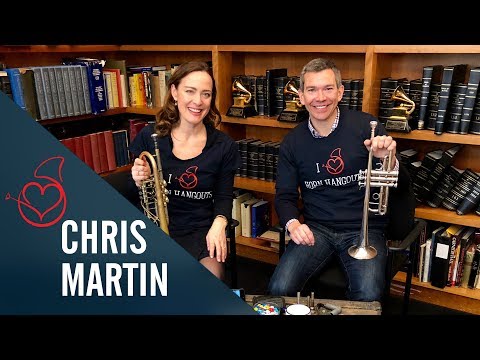
Eric Terwilliger live on the Horn Hangouts talking to Sarah Willis about the Philip Farkas warmup - and more! The Horn Hangout was part of a week long horn event in Palma de Mallorca, organised by Nigel Carter and Miriam Merino and involving many of Eric´s students. September 22nd, 2018 Conservatori Superior de Música de les Illes Balears, Palma de Mallorca

Transcript
Auto-generated from the live stream, expect the occasional robot mishearing.
[Music] [Applause] that applause was for us because we thought we played amazing yesterday BISM a mucho give us lots of kisses welcome back to the horn hangouts and we are in sunny Palma de Majorca this wonderful Spanish island for a special horn hangout stroke masterclass today with the wonderful Eric Terwilliger and to tell you exactly what we’ve been doing here
I have two wonderful people Nigel and Miriam from the orchestra you the orchestra again do you have to tell me the Spanish name for the orchestra Orchestre de la pista symphonic melodies exactly all together now okay Nigel your principal horn we are really old friends like really old friends because we used to study together at the guild hall tell me what’s been going on with all these wonderful people this week well we’re really excited we’re having a lot of fun
Eric played Strauss second with us up at the castle on Wednesday evening then the last two days we’ve been having master classes here with this wonderful group of guys and girls and now we’re all we are and Marion’s been working overtime she also plays in the orchestra I said to Mira Mira I want some beach so Miriam went and got us got brought a beach so gracias for the beach and thank you for organizing this it’s been a big horn event did you ever have such a big horn event here before no will you ever do it again no okay may
I introduce my wonderful friend and colleague Eric terwilliger applause Eric you’re too far away from me Eric this is your second horn hangout which is why your t-shirts a little bit washed out isn’t it I’ve been wearing it we’ll get you a new one as well so tell us what Nigel said you know you’ve been putting on this you had this event you played
Strauss to amazingly I heard what has been the idea behind doing this hanger because it was your idea yes and indeed well I’ve been here in Spain teaching we would we checked it out now for 23 years now and I’ve every time I’ve done a course here and I don’t know how many it’s been we we always use the same procedure of starting with the
Farkas warm-up that I explained the technique and the whole breath production and lips sensible ization and then I play it and the students play it back and we really wanted to do that online because also to prove to people that it is possible to do everybody says oh my god the is warm if I play that I’m dead
I can’t play anymore but if you do it properly it really is polish up how many people of you watching used the Farkas warm-up because how many here use the far cast warm-up ah there we go okay most of the people here so you’ve been doing this warm-up for the last two days with everyone and espanol which
I learned I learned a lot but today we’re going to do it in English and I hope people watching have their horns ready I know mark is in San Francisco and he’s just got up and he’s drinking coffee but mark I hope you’ve got your horn we’ve got we’ve got people from from Costa Rica Ricky Lee says hello to
Eric and Sarah from Berlin Alexander said that was the most awesome bazerman mucho ever there’s really people watching Costa Rica New York City this is really Netherlands ah Ella’s watching your friend the police woman oh hello Ella we won’t tell that story online after Iowa Netherlands Indiana University and horns are watching in Bloomington hello Indiana horns it’s so great you’re here last time you were watching or live you were up live in your pajamas weren’t you for hoho horn
Indiana is very important because Philip Farkas actually taught there tell us a little bit about Phil Farkas before we before we start well Phillip Lucas was the reason that I even applied to Indiana University because I was fascinated by his velvet tone quality and his noble phrasing the first time I actually heard was aware that he was playing something
I was like sixteen years old and heard a recording of the second Brahms Piano Concerto and I went running down to the basement got my horn and tried to play play like he did so what but when I got to I you in 72 there were no places in his studio vacant so I had the great privilege of having my first two semesters with
Ethel Mercker but she would excuse me I believe we have a photo of you and Phil and Ethel playing where was that in the earring chrome theater with the carpenters now probably nobody here knows the Carpenters I’m sure a lot of you are you do don’t you Yeah right we’ve only just begun but have you got that photo yeah
Kobe showing its fantasticks you ethel Mercker and philip in the eerie crown theater in Chicago in 1974 so but when when I was taking with Ethel those first two semesters whenever I’d do something strange or or remarkable she’d take me across the hall to fill and and showed showed him like how I do lip trills and so it’s okay if he’s doing like that very tuck while also moves that much when he does them and so
Phil and I had a contact of ready and I started them then after two semesters so it started with him in his studio but I never did the warm-up with him whenever I had a lesson with Philip Farkas I was warmed up to a concert edge I really wanted to present my very very best so that he could polish something and we talked about the warm-up occasionally and
I know that that he really said don’t worry about it you do some parts of it it’s not everybody shouldn’t play everything and it’s not the strict it’s a structure that everybody should make their that’s important for all of us watching to know you do not have to play the farc from the beginning to the end as it’s written
I I certainly don’t I do everyday you do everyday but not by you did not how it’s written but not exactly how exactly it changed my little pre warmup everybody can do it themselves what’s wonderful about it is no matter if you do it all or just a little bit you can always reduce it I use it when
I haven’t played for for six weeks or if I’ve had a bad accident or and haven’t played sometimes for six months like sup now you poor things November 21st you just goes and plays Strauss to to recover but the thing about it is you it’s always possible to do a baby version and leaving out the very top series and you can take it only up to a
G or take it to the next overtone or just take it however far it is for you without forcing because the main thing about this warm-up is it’s about developing sensitivity in the aperture on a steady stream of air and if you force it by trying to play too fat too early too high then it’s not going to be working and you’re going to be forcing and it’s contra productive okay well we’re going to be doing some of this is the point it’s not just a normal hang of just talking you’ll be doing these warm-up exercises with your students who by the way have come
From all over we’ve got people from Majorca we have people from Valenti and parlin Thea is that right Budapest Laszlo Colorado it’s a porno you you came you came the first yoga so yoga and Barcelona and we’ve got we’ve got severe Sevilla so you have collected your troops from unfortunately it’s great plan was that we would do it as a beach hangout
I know that’s why we did it at this time of year but we could not find a beach that had enough streaming quality to do it online and at this time of year all of the orchestras have started and I have students from my first generation that are playing and basically all of the the best orchestras in
Spain and they couldn’t Bernardo shyffilis is the only one that and the sponsor of my yearly course and in college where he comes from but so many people cannot come I thought we were gonna have a hundred Spanish horn players but it’s the wrong time of the year and we’re still not on the beach afterward we we are going to have a beach party and also
I’m sure most of you saw all these beautiful people in their bathing suits yesterday we had a great time filming that on the beach speaking of sponsors we have a big THANK YOU to gabru de Alexander who have sponsored this horn hangout and we are very grateful for that so thank you for that Philip is watching at home he has a he’s an injured foot so he couldn’t come but hello
Philip gracias danke Schon and a lot of you are watching on Facebook right now now I’m quite good at multitasking but not that good so I’ve got I’ve got the chat with the questions here from the website so if you want any questions ask either write them on the website or go to the chat box here on the website or write them in
Facebook maybe handsome Tim who is awake in Melbourne right now are you in Brisbane Tim where are you today Melbourne or Brisbane what time of night is it in Australia anyway we couldn’t do a hangout without handsome Tim and live stream his company so thank you very much and hope sorry we’re keeping you awake good so what what shall we what should we start with we’ve got we’ve got a question rich has said he used the
Douglas Hill warm which is supposedly an extension of the forecast there’s a lot of extra time it’s like the same way that I have no experience with other horns because I’ve always played an Alexander except there were since 1982 and you’re not just saying that because they’re sponsoring you’re a hanger no no no but also I’ve always played the same warm-up
I do have experience with anybody others any other warm-up so good well let’s do the warmup anyone who’s at home with the warmup we also Jakob and George have come here to Majorca with us is everything all right are we ready to go good first I would like to just explain some things about how to do the warm-up because um it’s all about developing aperture sensitivity
Philip Farkas would would would tell us you you have to taste the notes and he wasn’t saying no to strawberry or chocolate he meant that developing the muscle memory so that you actually could feel which note you were going to play and one of the big things he had was that the the aperture was responding to a steady air stream and
I’ve been doing yoga and Alexander Technique for over 40 years and have had the opportunity of applying it actively in 1983 a dentist damaged a nerve extracting a wisdom tooth and this part of my face died and after six months I was able to flex the corner I couldn’t even seal the corner off at first and when
I started back up I developed with yoga and Alexander Technique a system of opening up my air stream so that I could compensate for only having three quarters of an embouchure which sometimes is a good thing at the end of Mahler seventh for example in the last page of malla seventh my embouchure only hurts 3/4 as much as everybody else does so some positive parts about it but one of the main things that
I’ve learned is the value of postural integration because the the way to free up the airstream and not get it stuck in the middle is to allow the intercostal muscles to work and those are that’s the meet in between the ribs and they’re attached to the vertebrae and any type of energy that’s going downwards will make these intercostal muscles stiff and rigid and not be able to be put to use and the only way to get them opened up is to extend your keep and extension in in your vertebrae so that you’re not clamping down at anything so with the
Alexander Technique this was very very good I’m gonna do an Alexander Technique exercise with Sarah I know all of you that I saw his last hangout are probably laughing right now because I really landed me in it made me lie down on the floor in a short and go yoga but this is much easier you you just have to take your shoes off
I have to take my shoes okay but before before we do that I the reason that I’m so into the integration on the opening up of this part is so that I can use the intercostal muscles and I have a little thing that was the reason that I wanted to do a beach hangout that I call the beach position which is if
I’m standing at a beach and my chicken cemetery’s hanging out and want my sympathy a cemetery would they pull your my chicken cemetery yeah if I’m standing I’m relaxing my mind my belly’s hanging out and drinking a beer and on the beach and a bevy of beautiful girls go by I changed from this position to this position and this is exactly what
I do when I support so after I take in a relaxed natural breath there’s no such thing for me as a grass players breath I just try to breathe as natural as I can after I take that natural breath to construct my air bow then I tighten the Frog on that air bow by doing this and this
I have called the beach position it which is the whole reason I wanted to do it on the beach but so yes well and I’m going to I’m going to be doing the exercise yes we show doing this with with the group also they have some little exercises for that but in order to get in contact with the ability to do this without disturbing anything you have to be able to integrate your posture not only standing but also sitting in with the collection of lousy chairs and all the halls in the world that’s difficult but
I’m going to start standing with Sara yeah so we need a camera coming over here okay so this is an exercise this is an exercise that every movement should be done with an exhalation so at any time you’re doing one of the movements when you’re trying to do this with us make sure that every movement is done with an exhalation also with consciousness that the entire spine is is going and not clenching in any of the movements keeping the neck free it’s a whole
Alexander a concept but we can do this we okay to do this now let me get on the other side first okay so I’m get a little bit further away from the wallet from know that not to assess you for a minute a bit and good not get to your feet about hip foot hip width could have their hands hanging dumped so the first thing you start she’s not touching them all so you’re gonna breathe in and breathe out and hit the ball okay now in this position she has you will the small of her back is not touching the wall it’s like this so
The next thing you’re gonna do is to breathe in exhale and bend your knees over your toes slowly and slide down the wall can’t thing your hip so that you can press the back of into end of the wall breathe in again we then now breathe out and raise your heels raise no no wait we start we have to start from the very beginning again beginning just do what
I say okay so we said so breathe in breathe out hit the wall relax your head don’t get the head on the wall we just keep the head relaxed relaxed in photo okay breathe in exhale and take and bend your knees over your toes as much as you can slide down the wall and can’t your hips so that you can press the small of your back in there now you’re gonna breathe in and breathe out and just raise your heels come up on your toes now this way you can feel your back stairs and even more into the wall now you’re gonna breathe in again
And breathe out come down onto your heels and slide up the wall and come off the wall and and this really makes your your posture really does it really does it really the feeling of extension yeah if anybody’s seen me perform yeah you can see me doing that I always have before I play when I do this last thing
I will go up maybe it’s just a millimeter or two but I’m what I’m not doing is clapping down and this gives you the ability because if this part is free then the the intercostal muscles which are attached from here to here are not being clapped down upon and and these if you put everybody put their hands on there on there the costia then yes yep just yet if you put your and everybody just just breathe in naturally and breathe out you can feel an expansion and then a contraction here and that’s that’s natural and this is something that we can use naturally but it
Doesn’t work if you are not everybody get and try to tense your diaphragm so my whole support system is opening up by after I take my natural breath getting into the beats position so this releases any clapping by opening it and it’s a small movement you’ll see when I play that that is this is exactly what I do before
I play a note if I can get me what’s good in my chicken cemetary I’ll take when I take a breath this is going to expand with everything else see me tuck in and this the openness of here does some things that are very positive it first of all allows you to release the shoulders we’re holding the weight of the horn basically on our right hand and the last thing that
I have to check before I play is that this right shoulder is down so that I’m not clenching against my Airstream and also hurting the or inhibiting the expansion of the intercostal muscles it also with you play whether your chest open you’re going to have a better chance to vibrate the air in your chest is not only we’re not blowing air through the horn we’re making a vibration here that is amplified by the horn and if we keep our chests open we will be able to vibrate more air in or our chest and for me as the guy who
Spencer the fat all is of life I look a little bit slimmer when I’m performing so so how much yeah okay chicken cemetery like people like the chicken cemetery okay so before I do before we do anything I want everybody to stand up first just to get your your chest free okay not and I want everybody to just do this because
I want you to feel your chests open so go and do this okay now everybody feels it then just take a normal breath and feel how the chest can open up now mm-hmm now you are allowed to move your shoulders of course you can’t lift your shoulders to breathe but the shoulders will move at the end of a full breath the shoulders are also going to raise and expand you’ll see that
I’m out maybe this is a good time to mention that this the second that I played and on Wednesday night will be it’s being downloaded on YouTube now I’m not saying same on doctor doctors Emma from Budapest made a phenomenal recording with his blackberry the sound quality I couldn’t believe it but that will be also having a link on my website that just went up last week that is
Erik Terwilliger comm writtens written all together put the link on the chat great yeah Erik terwilliger comm yeah written together and in small letters and there’s some very interesting music things in a discography and all sorts of things on it pictures of me in strange yoga poses on the beach yeah so you can see that when I’m with there’s a couple parts in that a concerto where you have to use your entire capacity and
I watched it this morning I and I could really see myself before I played the very first introduction going doing this and see you could actually see my shoulders go up and then me releasing here so that’s the first step of getting the chest free and then I have another beach position exercise that I do using two hands because the most important thing about this whole concept of flexible support it when we have to develop flexibility because we’re horn players we’re the chameleons of the orchestra we play with the brass players and then they put their little thing horror instruments on the stands and we
Keep playing with the woodwinds and then they put their instruments on the Stantons we keep playing with with the the the strings the cellos and the violas and and then we have to play something alone completely so we’re always having that having to change our sounds and this flexibility that we need with that can be done with the system if you don’t get into the support while you’re breathing in so this is an exercise that helps you learn to separate the support from the breathing in the absolute natural breath has to be then made into something unnatural to play the horn we need compression and
This exercises to do that I’ll just demonstrate it once again for everybody it’s done with two hands left hand is here and then I’ll raise this hand and when I breathe out I will turn my hand to blow warm air onto my palm and with this turning of to get my palm I’m also getting into my Beach position making sure that it goes root or when we have one would perform there’s this thing called stage fright and pressure of performing and if we start with a rigid system and we get even tighter and tighter there’s going to be a point where you don’t feel anything
Going on where’s my errand people might have had experienced that and the way to combat that is to open up and remain flexible so the way that I do that is to first take a natural breath then get at the beach position and then play so I want to start first before the I do the Farkus warmup
I always do why call it in Spanish my disc but if the daughter baby but I feel and it’s a my wake-up call for my vibration my lips just just to feel that I actually have a vibration in the middle okay it’s impossible to feel that please [Music] this is just the beginning if you’re able to feel that you’re all going to be reconnecting your mind with your muscle memories to play the horn the way that we want to do it no
I start out first to get in contact with the inner ring not just how it the little lip feels on the outside of the mouthpiece but the inside by bending notes let’s just do a one of each series too so we don’t have we don’t have much time left so I’d first [Music] the same muscles that control that we also are helping us do our crescendo decrescendo so
I always followed that with a decrescendo crescendo decrescendo [Music] penis model in a small support open and then again to reconnect my muscle memories that it’s possible to slur without pushing I do one slur halftone slow down do my first articulation of the day white by making a legato tongue without interrupting the airstream and slur back up and
I’m just reconnecting things and trying to make it also as easy as going because that’s the feeling that I want to always have so let me do that first [Music] Oh No and this should be Metsa 40 that was too loud I want to start all my days for going first feeling natural so I’ll do that all the way down including the the bending and crescendo decrescendo let’s just do the last one so we we don’t
I’ll lose too much time just do one here one two metaphor day the whole thing I’m doing a warm-up is not only warming up your lips you’re reconnecting the muscle memories with the mental aspects of telling yourself to do this so while I’m doing these easy steps I’m really concentrating on first of all feeling myself opening up feeling myself not clamping down in the diaphragm so that every that
I have to zones of flexion in my abdominal muscles and in my embouchure and everything else between is trying to be as relaxed as possible at despite holding up horn so after that just to reconnect the sensation that it’s possible to play higher without contracting against my abdominal muscles but actually flexing the abdominal muscles and opening my chest
I do a very simple chromatic scale so I can feel myself going ah I’m not going and the first octave you don’t really need to use that much compression difference it’s all about reconnecting these these mental images to get those muscle memories going so I just do a chromatic scale on F horn [Music] try not to go but really make myself sure that
I’m going does little bit and that gets me ready to do to start the Farkas warm-up because the first thing on the Farkas firm is this pre warm-up that goes all the way up to a high C it’s a series of arpeggios series of RPG that have has a little eighth note done in between each of the notes and this is to make sure that we remain flexible because it’s not possible to play that eighth note break on a high
C if you’re going the only way to do that is to remain flexible and not fight against the abdominal muscles so we’ll do a few series of that too I play and then the group plays this is part of the warm-up you mix it you can use F 1 B flat horn doesn’t matter what you do whatever you want so everybody gets ready [Music] each one of those notes are separated we’re not separating by going we’re trying to get it all on one flexible
Airstream so that goes on and on and on and on and on and on until we go up to [Music] [Applause] it goes gradually but we don’t have much time but don’t worry you don’t have to do that right away but what this whole thing goes up if we do this properly we’re not going to MIT may have a point where we do something different in the high range we’re just going to continue doing everything the right way so that the high range becomes something that we do without having to change anything after that we’ll do a couple of series of the the next section
Which is the only part of the warm-up where you actually play loud the if we are striving not to push any notes to make to wait for every single slur that Farkus also also was said was a flick of the lips on this part as in all of the rest of the warm-up i always start on the bottom and the warm-up with it is in the
Farkas book he starts on the the the open series that goes all over the hi-c Farkas had a high range that I would probably cut off a finger tip to have what he could play in the I arranged but his low range wasn’t good till early Spiegel was always little bit ability second or so and so he started on the top we humans like to start on the bottom so we’ll start first started on the bottom and
I’ll play it no work and everybody do it it’s possible also to reduce pressure first of all by making sure that the shoulders is down the right shoulder relaxed will help you um open up the entire shoulder region we’re carrying the weight of the horn on the right shoulder so we have to be very vigilant that this is not clamping down if you do that then you can access the chest and you also if you’ve got the shoulders relaxed you can learn to distribute pressure rather than just putting it on and if you can try to feel now 360 degrees of your mouthpiece brim while
You’re doing this especially in the ranges where you don’t need to press that hard low range then you can gradually learn to use less pressure in the entire ranges and let the air vibrate the lips that’s what it’s all about [Music] specifications people who have less high range should not go up to the high note they can do this a second in the next overtone by going [Music] incident there’s always the option of going up to that first overton so because it’s not a competition it’s trying to find out how can
I do this efficiently and relax so that I can learn to reduce this so I’m not going to be afraid of performing of the tension and the rigidity can be turned into openness so there’s also when I’m warming up as where after a long time I also sometimes at the very last series with only on overtones going [Music] so there’s many options you can do this depending on how much strength you have so the important thing is also in between these in between breaths is feeling reflection in your abdominal muscles so you you have only a very short time to breathe and get back into
The beach position so you could make sure that you’re feeling your abdominal muscles and then when you go to your yeah so give yourself time do you have any for people that are not quite feeling the chicken cemetery what exactly should we be feeling there well this I don’t know I’m very digital diligent in doing doing exercises every morning
I’m on the floor right after I get out of bed doing yoga and and I do a series of stomach exercises that I can feel my abdominal muscles people who just sit around on the the potato and the couch bit couch potatoes have more trouble feeling this because they don’t have contact with your muscles horan is a physical thing you have to get yourself in shape
I’m fat but fit and you have a reflection in your stomach muscles are something that you can learn how to feel if doing your lunch some ik exercises as well so I’ll just do go up and down and then you play it okay I’ll do the very last series [Music] [Applause] [Music] be careful I heard you going well of course in the very last part it’s easier to play and you can get sloppy and not keeping the support going never push notes and be very very and very sure that you’re keeping this flex going throughout the whole thing the marvelous thing about this system is
If you’re not fighting against those abdominal muscles with it’s part you don’t really have to use that much effort it really makes horn playing easy it makes it playing not work and I have enough work so let’s go on yeah that goes all the way up to the high seat all the way up and down but now let’s go on let’s pick the first valve combination for this next one the same thing that we did on the beach in the water yesterday hmm this goes on now it goes down to mezzo
Forte and as it goes I think I’ll play play through all of them and then everybody will just do one okay I’ll do all of them quick [Music] well two of them is enough now everybody do the B flood okay in that temple and make sure that you’re not going hahaha try to feel that flex going from the very bottom to the top so that you’re not having to do something different to hit that high note if you’re doing this alone try to make sure you you you do it with a metronome in the beginning so you don’t slow down and give you a chance
At yourself a chance to do something wrong okay so everybody with with first off b-flat Luba do body let’s just keep going on first valve because this is just a demonstration this can be done from out with second in the third all the way up to open depending on how much time I have sometimes on tour we get there and there’s only ten minutes before we have a of the stage rehearsal and
I can only do the first 10 minutes of the warm-up but that’s sometimes life so let’s the next part is its from here on in its piano and this part has here is faster and Farkas describes it with a woodwind like lightness so we’re really trying to get in contact with the embouchure and making sure that this aperture is responding to the
Airstream the more we improve the quality of air by not clamping down but opening up and get broadening our air will be able to create more impact and more and create more vibration with the even less amount of air and piano is extremely important I don’t really want to say anything bad about conductors but they’re not really my best friends sometimes and there’s one part of a conductors anatomy that
I really don’t like and that’s their palm sticking in my face like this so I’m always trying to play work on playing piano and and pianist row so that I can I I don’t see that and how often to the horn how often do the conductors say more horns more horns you hardly ever hear that yeah okay so this next part is very as light and and and fleet as you can make it [Music] good that case again the second and third all the way up to open open the next serious changes directions and you really have to be careful that you’re not going the
Kind of we yeah and again making sure that we’re using less pressure on the bottom so we don’t have to use that much pressure on top there are limitations every we have to press harder when we play higher but we’re made out of flesh and blood and as my daughter always reminds me and fat daddy and so we make sure that we don’t press on the bottom we can test less on the top let’s just say
Annie blood may be a little slower because we have a mixed group here is this very difficult in a group when you’re doing this alone make sure that you’re not doing it too fast so and then you get sloppy okay and the intervals keep getting larger and larger but what we’re really trying to do is keep the air so steady that we’re not inadvertently huffing the notes into places as
Farkas said well we don’t want to push notes I mean you think if you go look you’re going to get more and you’re gonna get more compression and indeed at the end of a loop maybe there’s more compression but if you’re going yeah at the end of that where there’s less compression that’s exactly where we wanted with a slur and that’s why the the slurs gets sloppy and don’t speak because the air the lips are starved for air so again steady air is the key to this next part [Music] and it’s done without any excess working against the bottom in order to help that out
Let’s first just everybody do a glissando to make sure you cannot do a glissando trying to push every overtone it doesn’t work and that will help you do the next part without pushing feel it steady open up before no good one too [Music] and then then come octaves and and if you doing this all properly and then you by this time you have gotten in contact with the flowing of the the open air column and the stimulation of vibration in your lips and you should be able to do this it’s about flexibility it’s not about because we try to do that getting just just
Beethoven 9th is gonna kill you a lot of people watching on Facebook so we’re very happy for that a lot of people saying hi to you there’s just some questions about the Farkus one but also my personal questions so when he writes it in his book which is our Bible the art of playing the French war he writes it starting with a
C and going down to because he preferred wood Hut the higher register right you work up from the bottom yes I do I think all of my students do as well yeah is there a danger with younger players like the one you just did the ba ba ba ba ba ba I’m glad we didn’t have to play that now we will we’re going to play that but how to make sure there’s no acrobatics going on here well first of all if your money the cameras on me you’ll see that my lips move a lot as
I explained I only have three quarters of an embouchure and I have if you want you can see the corners of my lips are have different flex because I don’t have feeling in this part here if you see after this corner as if in then this corner so I have lots of movement but I’ve had students that even have a low range change at the pool about
Monroe and and I said well gosh you’re gonna have to change that do you and I came back a year later and he said I have to show you this anyone who hears about anything so fast and it really worked and he’s a second horn in the Paris Opera I mean but of course acrobatics are not good but
I think the main problem with younger players is starting out that bottom note and I’ve I recommend having contact with your lip with your tongue to like spitting a tip of an orange out of your tank just write the note if we’re doing justa Kovich pith and everybody has to go oh I’ve got to just start that out you guys know
Eric never leaves it out that’s a relaxing part finally becoming relaxed to start out these bottom notes - oh you’ll see that I’m actually doing this oh just start out those bottom notes of course with a steady air stream you can’t Huff it you have to get the air set up and release it and then just start it very slowly
I’m to just try to find these before I have strength when after a break I’m only going the good thing about doing this this next overtone is if you do the whole series and you get up to a a flat so if you can get that easily then you can already go there will be that same note sorry please carry on it’s just the people question there you are it’s good so the next part this is all the slurred part then comes a tongue part which is basically exactly the same as the the first part but it’s separated by a page of scales now the
Object of these scales is to make sure that we have the same clean attack through the entire range of the horn and it’s also then goes up to 176 which and is a real exercise of making sure that the tongue is not having too large movements well if you reduce the the the the movement to a small movement then you’re going to have the ability to tongue much quicker and and cleaner the longer we tongue it the tongue is a muscle tends to get rigid and if we’re doing this it’s going to get even even more tight and and
I always have to think of celli Boudicca when he was in his 80s doing Tchaikovsky’s fifth with him not this level went good because that was coming that was either play or die but the last movement the boy would go like after after ten minutes of this and trying to keep the tongue loose with something like that this is a very good start for this and it’s not about playing it in one breath you can breathe whenever you want to it’s about trying to maintain a clean rapid tongue throughout the three actors [Music] [Applause] it’s fun to see how far you can go with it
And how many times you can repeat it but let’s do it now with just without read at all before I played it yes okay so you can breathe whenever wherever you want in a group let’s go try to get in this temple and make sure make sure that we’re using the same production and not getting louder when we get higher keeping the same mat so forth a clean dynamic no oh no no aah [Music] [Applause] afterwards we’re trying to just do that same thing the the be careful you don’t play it too fast any of these series before you really can it’s much more efficient
And if for the the production and improving if you do it slower and with a metronome so you’re making sure you’re not slowing down for a difficult part in changing things trying to get it all on one some real flexible Airstream is what it’s all about the tongue though if if you use the system in the air there are basically no limit just this is ridiculous and don’t try to do this in until you you can and it’s not with the way
I do it but just to demonstrate that how fast the tongue can be with this next part I’ll do it in a ridiculous way and it’s not anything except reducing the the length of the the distance between the tongue and end the teeth and staying is staying relaxed but let’s do it on first valve in a in a good tempo which would be if we were going we’ll probably be able to go [Music] now these these are very advanced players and
Bernardo has been doing the the Farkas warm-up for 23 years quanto Runyan Stoker’s Tommy yeah what she’s been doing it for for nine years and I’ve been doing it for 42 years and this is also a progression but if you do this daily you are going to make sure that you’re counteracting this biorhythm we’re there’s not only a biorhythm of our body buyer there’s a horn buyer rhythm depending on how much we’ve played or gossip or jet lag or where we’ve been traveling so long we have that time to to practice or if we’ve been maybe using our lips for other things with too much
Or or god forbid you could ever have something like a hangover and every day is different and if you do the same structure every day you’re going to be learn how to keep those curves at least so that the audience doesn’t know them hmm so let’s as you see under the Farkus the the warm-up starts then on the tyre octave let’s do it the bottom octave on first fourth again [Music]
Oh [Music] another question just come in um what when people are doing this in a group warm up me I you can sort of feel the energy going towards that high note because every once again mm-hmm and that might be a little bit damaging if you’re doing a warm-up no you can you tell us again what we can do to avoid that yes well very good question because
I always emphasize in a group first of all that it’s not a competition it’s all about finding your own registers and and trying to improve them maybe a half note at a time there’s always the option of going using the last harmonic or not playing the top note at all I sometimes I tell the students to do this in the very first part when we’re doing in a group so you’re not just going and getting it anyway you want because we are in the business of selling notes there’s like a baker who wants to buy a burnt clump of bread we want to sell beautiful
Smelling brown buns and and the same thing we want to sell good notes so if you only getting him out by going I got it you’re not going to be able to sell it and that’s only a very that’s not why I play the horn I play the and if I can digress even more I think the our job as musicians is to play beautiful music so in a way that our audience will be able to forget the troubles of the world just for even a couple of seconds if
I manage to make to make enough music that for just for a few seconds the audience is going and not thinking about some of these horrible things that are going on in the world then I think we’ve done our job as a musician I I’m I must admit you guys sorry I’m having a little problem with I’ve got the chat now up on
Facebook so it’s it is it’s very complicated here today but it’s still working really well you can see this your Victoria’s watching in Philadelphia hello Victoria one of my Pacific music Julie Landsman has got up in his watch Jacqueline in Dallas Texas has been working on our articulation religiously and this is extremely helpful if you’ve got questions keep them short because
I can only see the short ones okay where are we so we were going be puppy puppy puppy paw and then that question came in of course what if you do as I said alright in the very beginning if you’re only getting that top note by doing something different than going dot dot dot then it’s really wrong then you’re doing it too early and that’s why
I say if you if you’re having trouble with that top note just play the next overtone and go it is such a little difference and if you do that whole series then you’ve already played the a flat and you can go back and play it on the a flat without having to go it’s very often a mental barrier the one of the main things is that if you have too much tension on top going in or also here using the diaphragm oklets support going oh it’s really much easier to really move here by going than it is to going then if you do too much
Up against here you’re going to be blocking the strength that you can should be taking all the way up to the lips and the abdominal muscles that’s you relying another philosophy relying recommends bumping one note into the next by relying on the air maximum speed slurring for you and that’s one of the things I love most about playing with you with these slurs you do you you you slur into them you don’t you don’t bump you don’t push well how does the warm-up help with that well it’s all about consistency it’s all about remaining keeping the air constant and just changing the slurs with a
Flick of the lips the whole thing the whole warm-up I’ve been saying don’t push and I was describing if you go oh then it goes and there’s actually less where you really need it the the sensitivity that we learn through using pianissimo also I think is a very big part of learning how to feel the inside it’s all linked up with introspection and and learning how to feel it so that we store muscle memories that can work when we just loosen up and and let them flow
Fred Brownlee asked is it okay to mix other warm ups with the Farkus warmer you can warm up any way you want as long as you do it properly I use the Farkus warm up I and there’s what works for me what one as long as you’re trying to take care of you your proper technique which is not clamping down on your ear string but relaxing then it and then it works
I mean people ask me how can you play that till on Spiegel encore after playing Strauss second and it’s because I’m relaxed I really try to play like people say was what the Beethoven 7th recording with you guys and other things helped and laban obviously he said how can you how can you do that usually look so relaxed as well that’s because
I am relaxed oh you you start the day with these relaxing warmups you you really do every day um another thing maybe worth asking you would have a seat another thing maybe worth asking is there’s there’s been some talk with this focal dystonia thing about maybe it’s being caused by people doing the same thing every day no
I it’s big if the same thing they’re doing is forcing then that what is cause there are two students here also that has have had focal dystonia lászló and he told me yesterday he said you saved you saved my life I I could not play a note and then after he invited me to Budapest and I did master classes at the
Franz Liszt Academy and we worked and talked for a just days and days non-stop and after that he started playing again by using this system of opening up and vibrating because dystonia obviously makes a good horn player go you know I did a study once after a horn convention after after I played second straws in the thing
I guess maybe 12 13 years ago and an old friend with whom I had studied was doing this this research and he hooked me up to all the electrodes and everything and had me force had me force until I almost had focal dystonia of myself this is this is I think why focal dystonia happens is is is the forcing greetings from
Azerbaijan oh no is is Rafa is is raffia rasulov sorry I did that wrong and milady Oh Allen Marin is what she said sometimes with you they played the baby Farkas yes a baby for the baby Farkas is exactly that not using not playing the high note I’m just can you just give us just doing the the baby
Farkas and this what I also use if I if I have not played a note in after six glorious weeks of summer vacation that I tried I didn’t do every time I’ll start first of all just with an octave sometimes I only play the fifth going and if I get up to a mmm then then I’ll go back to the octave and go it up and if and
I get to a then I’ll do the octave and a half and then I will on the first day I never play higher than a G so I’ll do all of those series going I’m the first day I never play higher than Angie and then I take a break and then I play Bach Suites the cello suites are that’s the most beauty
Regional Hospital because I I cut my box teeth on that when I was in college we like these sort of insider information Argentina we just had Fernando is watching Fernando Chaparro and he said he loves the Farkas exercises done from was 20 years ago right so where are we in the warm-up exactly the same thing and goes there does the we we’ve we’ve done in pretty much showed everybody that it’s also possible playing these notes and playing these things and
I’ve done this with literally hundreds of Spanish students over the over these years and I finally we have to find it’s time to finally make a list of where all my students are playing in Spain because I have more students and jobs in Spain than in any other country in the world I’m half Italian and I think it’s my
Mediterranean blood that has given me this Spanish connection friend of mine from LA is on holiday right now in Spain on Olaf on the Rhondda and he’s during the class how many days an Alan Alan Fogle hi Alan how many days do you like to give yourself after a vacation to get back into shape well you had a long vacation because you had a bad accident and oh yes that was more of a vacation
I was generally if I have if I have rehearsals in the orchestra I need five days to get in back back in shape after even six weeks off by doing a baby Farkas the first day the next day I’ll go up to him and a or a flat and then maybe just one of them and then I do that for the next day
I just do the the penultimate the next overtone and oh by the third day I’m already going up usually by the fourth day I can get to a high C the fifth day is is trying not to do too much when I think I’m already doing it but I’ve been doing this for over forty years I Sarah knows
I’ve always worked incessantly in at least two orchestras simultaneously and by the time the season rolls around I just need a vacation so I take good 6we it’s off every every year when I can this how long do you need to get back into shape yeah and if I fight at five days if I have a rehearsal and yeah if
I have a solo concerto it takes me two weeks because I don’t so looking to play if you’re playing as a soloist you don’t get to build up strength in a rehearsal you’re trying to survive the rehearsals not to give all of your strength before the concerts here so Eric it’s really hard to say this this is a really mean question to ask but what would be your ultimate piece of advice for all of us sitting here all of us watching out there what is your ultimate piece of advice that would be exactly the same thing that
Farkus wrote in his book and he wrote if there was one thing that I would suggest and this he was it that you would have every every horn student or player would have a light on his stand that he would turn on before they play and it says relax of course we’re looking youth not that well relaxing is everything that
I’ve been talking about about poise flexion of getting into this part to open up the chest I guess if the way I would translate that into my technique was not to work against the bottom with the top if even if it’s this diaphragmatic support that goes what you’re doing is inhibiting the the flexibility of the intercostal muscles and that is what it’s all about that’s why
I can still I’m sixty four and a half just broke my neck in two places and on November 21st and I actually really had fun with the stress on Wednesday and which will be on you to the amazing we will be able to hear you’re on my new website if you’re not using this Internet so have you have you
I’m done this eric Terwilliger duck now we did that is we have got Eric to Wiligut calm is the new website Philip Alexander has has written and he’s watching and thank you Phillip for yeah for sponsoring the Hangouts and yeah a lot of people one Manuel Gomez from Barcelona is just written saying he’s been playing the workers the warm-up since he’s met you and
Fernanda wants to talk about to you about the importance of working F horn and it’s Fernando you’ll have to do that another hangout today we’re done and we have a big party to go to oh yes Nigel and Miriam backstage there’s the most amazing smells coming I don’t know what your empanadas are what’s back there oh it’s it’s going to the beach we are vamos a la playa multiply we really are we might take some pictures and share them with you but to say thank you for watching and to send you a special greeting we have
Nigel tell me what this what are we going to play we have a special greeting for everyone now that you’ve arranged for all of us so why don’t you set up and Eric and I are gonna come up to the camera and say goodbye to everyone you guys set it up behind here quick quick quick we’re coming up to you thank you very very much for for watching and you can do
Terry on sending in your questions it on the Facebook we’ll be able to see them all afterwards and yeah we’re gonna go have some of the beach thank you Eric oh that’s my pleasure really order I tell you when we when we come into work Ericsson playing a lot of first tone with us at the Berlin chill and one hour you can set your watch by it one hour before the concert you are doing and before the rehearsal you are doing your you really you are doing your focus warm up trying to get into the groove getting loose and relaxed and focused and flexible it’s
Great um where can you buy the Farkas book these days mine is so dogged that I know it’s I’m sure it’s online still my mind is lost the cover and you asked me to bring mine yeah literally in tatters you have one in Spanish as well well I just have the translation has been yeah oh and with the website
I have Spanish and German as well as we will be up within a week also on the website not just in English or in hangouts are just great promotion good for you thank you and it’s actually quite funny that the internet went down junior time so we’ll have to have you back again how about that definitely we have to do it in
Cuba Cuba that’s right any of my Cuban friends watching today hello we your way - can we come in come in come in come in come in don’t be shy they’re very shy so we now have this piece for you which is hotter now don’t tell me what is called Jota marinara Jota marinara Jota marine air it sometimes sounds like a pasta sauce this is for you this is
Eric and his wonderful group of students a big big thank you to Nigel and Mariam for organizing organizing it’s really been amazing I’m very happy to be part of it I’m here as Eric’s fan and thank you George Eric and George Jakob and Tim as well for running the stream we’ll see you next time we’re not quite sure what the next
Horan hangout is send us some suggestions we’ll see what we can do okay here we go this is for you dos Campos [Music] [Applause] [Music]
Horn Hangouts are created by Sarah Willis of the Berlin Philharmonic. Brassbanned is a proud long-time collaborator and streaming partner.