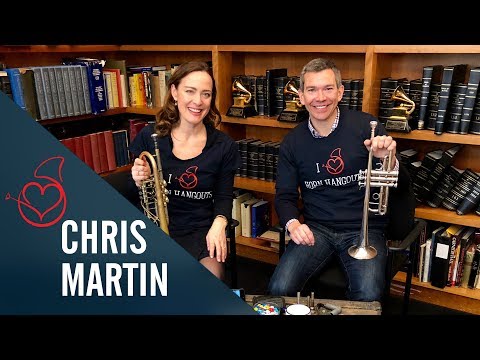
Chris Martin, principal trumpet of the New York Philharmonic, talks to Sarah Willis live on the Horn Hangouts. Special thanks to Barbara Hawes at the New York Philharmonic Archives for letting us hang out there.
Transcript
Auto-generated from the live stream, expect the occasional robot mishearing.
[Music] you [Music] I know what’s that - Oh played modifier he did right into my play I would play just his little solo from his tune I miss our bailiffs from Dan’s raw album back in the 90s I think I was gonna be so you know his stuff yeah so he so the next part you know this has you know
F sharps above CC I can’t bitterly so but I yeah that’s one of my favorite one of my favorite tunes he ever did and one of my favorite trumpet recordings and trumpet pieces ever so I thought since he played ma5 it’s usually he plays it on the flute oh but he was very honored that you watched his hangout he was really - he’s on a boat on the
Caribbean right at the moment so I don’t know don’t know if they even have Wi-Fi but welcome to the horn hangouts that was one of the most gorgeous planes ever Chris Martin principal trumpet of the New York Philharmonic welcome we’re really really happy that it’s finally worked out thank you thank you for having and we are in an incredibly special space this is the
New York Philharmonic archives and there is so much history in here we wanted before we start to say a huge thank you I don’t know where’s Barbara barb Barbara this is Barbara and Barbara is you you are a legend come come on in here between us everyone between us just for a sec I want to introduce introduce you to
Barbara you you are the arc yo you’re going on your knees in front yes the the the head archivist what what is your title archivist historian archivist historian of the New York for the morning and you have so much stuff in here you what we walked in yesterday to check the space and Leonard Bernstein’s score of mile or nine just happened to be on the table but in your honor the court
Barbara’s looked out for today yes so Leonard Bernstein’s score of Mahler 5 there you go yeah he didn’t move it he didn’t he didn’t change it over to the clarinet partner so but he’s written all sorts of stuff in here about what he feels about the what did he say about this Barbara rage hostility sublimation by Mahler and here angry bitter sour issued with that’s hard that’s hard right it’s a little one said comforting lullabies rocking a corpse oh that’s perfect actually perfectly
McCobb yes his tempo marking I notice is exactly mine as well see see and this is this always this dynamic always seems to be an issue that people talk about at the beginning and interesting key highlights that diminuendo yeah mm-hmm the amazing thing about that your archive is that there’s so much in here but also you have everything archived online so if any trumpet players are watching and they want to get the first trumpet part of
Bernstein’s parts they can go online and it’s it’s all there with markings and wisdom all the markings so who would have played first trumpet for Bernstein here in the in the New York Phil it would have been Bill Bucky ah no and then I think Phil Smith played it once in the 80s with with Lenny Lenny and then and then 50 years from now there will be your part so yeah
I’ll work on my handwriting there you go keep it in mind make it interesting we have Leonard Bernstein’s baton made by a timpani player in the orchid Goodman Saul Goodman because he made his own mallets would make them conductors baton very light yeah isn’t it see and what makes this very different than other conductors batons to see then it’s also very practical because it allowed him to keep it in his fingers and then he could come down like that well you showed me
Toscanini’s this is Toscanini x’ baton you guys look at the length of that you could really poke out the eyes of the viola section with that good shoot not that anyone would want to almost a Fritz Reiner length longer incredible is it there’s a whole conversation there we should have thank you for letting us come here and be here in this amazing mansion if any of you in
New York I can only recommend contact Barbara and come here you I got very humbled when I came in here yesterday and Barbara said oh yes we have all any scores she opens this huge great big sliding door and they’re all his scores and you can come and listen to any any performances as well here because we we record nearly every single concert everything and and this is a place on where you can come and listen to it as well as listening to
Phil Smith or bill Bach Ianno and even Harry glance speaking of Harry glunk her glance sorry Harry glance I even have his mouthpiece here Harry gunce was a principal trumpet in Toscanini’s time that’s right that’s right it says like I buzzed it a bit it’s fantastic mouthpiece more than it’s a bit smaller in the rim of the cup is nice it’s not so different from my cup actually and it’s nice and open in the back though which is really great which is sort of that it explains his sound he had this he had this
I think amazing focus like a laser but a huge big fat sound behind it yeah and what a gift that you can just come in here all these concerts so you’re gonna be inundated with trumpet players thank you the wonderful barber halls from the New York feel are Kai’s who’s off to Boston see you thank you so much right everybody we have also ant you’re at the head of your fan club
Ansel Norris is watching from Miami I’m in this family they they have a rehearsal right now so I think he’s illegally tuned in on his on his iPhone the typical trumpet player iPhone on the stand looking like you’re watching their music I don’t know don’t you wouldn’t know about that don’t get caught and Gabe is here in the archive as well
Thank You Gabe he’s he’s written in the Z though the web address the URL folk though you can go into the archives earth and if you have any other arc archival questions about this place then do write them in because Gabe is ready to answer them all but most people are going to going to want to ask you questions you had some people saying hello geek stuff we love geek stuff
Jack Bert is watching and saying he wants a lot of geek stuff so and there’s people getting ready for a concert Jack would like Chris to talk about mouthpiece choices between piston and rotary that’s very geeky and but but should we just start with geeky questions because there’s a lot of online you can find out where you were you studied where you you know you started in a band your dad was a horn player yeah and so we you you know plays a bit on the weekends you abandoned us you’re not a horn player anymore not really that was okay if
I told you it’s too hard horn is too difficult for me I know that and then you were you were in his you were in the band that was and then I so I grew up in in the band world and my my father my uncle they were both my teachers growing up and then also in the in this country we have the drum and bugle corps world so
I grew up in that as well and you know I spend a lot of time marching around a football field and and playing outside and it’s great for the child great for that unless somebody hit runs into you if someone says stop and you don’t get that maybe you’re looking at the museum trumpet hits his back fast yeah but
I grew up in that world but I quickly thanks to my dad as well I fell in love with the orchestra and he I can remember still the first recording he ever played for me the pictures at an Exhibition CSO schulte and from now of course was hooked and I still loved the band and I still in going to school at
Eastman I played I played more often in the band and the Wind Ensemble than I ever did they march terrible football team well yeah and then after Eastman you actually you got your first job on the way to another job right I heard that’s true I did I finished Eastman and I I’d applied to some grad school and
I I I didn’t get in so I thought oh what am I going to do so I spent the whole summer practicing and I had had a sort of a trial week coming it in an orchestra in Buffalo but on the way it just so happened that this the Philadelphia Orchestra had an audition just the weekend before and
I thought well I’ll try you know I don’t want to look I don’t want to live in my parents basement if I can help it so I didn’t know anybody in Philly I knew of David builder I knew the orchestra from recordings but I didn’t know anyone there no connection to the city or the orchestra so I thought no pressure
I’ll just go so I went and I just played I just played the way I played yeah and that’s the best you know of course that’s sometimes that’s when you some of you play your best and you’re surprised and and good things can happen I will trumpet in Philly and you were aged like 20 associate it was associate to play for us yeah
I was 22 I had no business doing it I was very lucky and and grateful to those guys for giving me a chance that’s it it’s a big risk to take on a kid and I had shaved my head not bald but almost bald at that time because I had I had dyed my hair blonde the summer before and a terrible move and and so
I’d saved it all off so I was very strange-looking what I know you had such a colorful youth I was a so I was very lucky and I was there for three years and then I my former teacher retired from Atlanta and went to teach at Eastman interestingly enough and so I replaced him in Atlanta for five years and then
I was in Chicago for 11 before you and you’ve been here since 2016 in New York Stephen burns is watching from Chicago and said we miss you man yeah I miss you too hi Stephen yes I mean principal trumpet Chicago Symphony in New York fellow I think is two of the biggest jobs in the world how does
Chicago and New York compare of cities you can hear all the traffic going on that yeah loud it’s true New York is obviously it’s New York Chicago is a bit it’s it’s a big city it’s it’s an exciting place but it’s definitely a bit more chill a bit more relaxed than New York in terms of music and culture and arts they’re both great places the biggest difference
I would say is in Chicago there’s a real there’s a there’s a fierce loyalty to anything Chicago and and that’s definitely true of the orchestra and in New York it’s a bit more something going on up there right now this fire trucks galore I didn’t maybe the first one party yeah oh yes no we finished that last night but
I’m feeling a little yes it was quite a big party by the way Claire Martin is written in hey daddy I love you hey Claire and we have a gorgeous picture of you and Claire there’s a couple of them I just love them can we have a look at Jerry’s room this was a while back this was her first trumpet and she’s still playing she she can graduate two horns soon she still plays every day she has she does a five-minute warm-up every morning well that’s so sweet yeah
I do my warmup and then she comes and plays on a cornet Tennessee and how does it sound what sort of exercises does she do it’s loud so she’s doing right now she’s just doing long tones from G to C and but she can play sometimes G and even he at the top of the staff so Oh cute we’ll get her in for her and she has a goal about he’s a gold mouth
I have won gold mouthpiece and she chose that one for herself of course I understand that I get that okay so so that that’s basically your potted history in but we can we can google the the dovetails in between which are great so let’s get onto the geeks talk I mean we have people there’s there’s someone watching gears watching in
Norway my mum’s watching in England Martin is watching in Belgium Richard in Atlanta Oh someone’s asked the question does Rotary mean Berlin is next so we can get onto that later Pepe is watching in Italy anyway let’s get back to Jack you know jack don’t you join Burt and his rotary mouthpiece choices between piston and rotary okay so we really were nerding out so and we like nerdy stuff yeah all those northern pretend
I understand so I will be perfectly honest with you Jack and tell you that sometimes depending on the time in the season and how it falls I will play but that’s the same mouthpiece for a rotary that I play on piston sometimes but usually so I play normally I play my Pig my piston mouthpiece is a Jeff
Park mouthpiece it’s basically a one-and-a-half 5 B 24 and regular symphonic back door and the my piston mouthpiece I this is I got this from Hans couch and it’s it’s a sort of a copy of his it’s a it’s a 16 e and everyone’s rushing it’s down 16 eights about your notes one and a half maybe B ish and but a little bit different shape and the it’s it’s quite big in the back though the back doors quite big the throat is maybe 23 may be on the way to 22 so for me it’s it’s the best it’s it’s a better sound for 90% of
Rotary repertoire the most important thing is that the as much as possible the rim can feel the same and I find generally a bit more open throat and backboard helps the the feeling the balance in the in the rotary I that was a question because we horn players we don’t like to change you guys for changing mouthpieces all the time
I keep you know you always see trumpet players reaching into their little their pockets underneath their their tails and coming out with another mouthpiece for another bit but we try not to get the rim if I mess up my riff I put in a different room than I’ve had it how do you guys do that how many different mouthpieces yeah well
I have I probably have three at 300 350 at home okay mouthpiece nerd of those literally I play I play these okay so I play the one I spoke about on the piston yeah rotary 70 on the piccolo trumpet and sometimes I use curry TF trumpet flugel which is nice for some really soft things the mala third song of the nightingale sometimes
I use that and then pretty much the only other mouthpiece I use is it’s a it’s a Jeff Park same room just a c-cup and a little bit smaller in the back for lead stuff for jet orb you know pops shows or playing West Side Story things like that and that’s pretty much it we have a picture of you guys playing
West Side Story the New York filling West Lester and you got mr. legend man the man in you had Wayne down didn’t we had way yeah yeah we were where is he he’s in the bet he’s the tall guy and he’s not really talking yeah yeah he’s the guy who looks like he can play a triple C’s well he can and actually he’s promised me he’ll come and do a horn hangout - excellent so we’re going to get weaned on that’s great you’ve got someone else watching on from sunny
California Bob Malone is watching hey Bob so hi Bob how are you but so Wayne came in to do all that really that wasn’t raising yeah I mean how high up above high C sounds like that’s like his warm-up note and then from there it’s it’s like another octave problem yeah and the nicest guy well I’d like to start with all this nerdy geeky we have too big if you guys are watching on
Facebook I think is going out live on Facebook we’ve managed to do that I chat amongst yourselves in the facebook chat but I’m using the chat on the website because the facebook chat and you only see three messages at a time and it can get very confusing so I’m on on my website on the chat but I know that two big trumpet pages have helped promote this trumpet land and trumpet lovers that’s and there was a two very big trumpet pages and they were both very excited that you were coming to thank both of you guys for and
I know they’re going to be chasing you for their own interviews and I said fine I’m just farming you out there no worries so that’s great thanks for all that promotion so if you’re watching on Facebook fantastic if you’ve got questions for Chris come and put them in my iPad okay from the page then I can get them so
Frederick Troy said how did you work on your sound when you were a younger player that’s a good question two things one is one is the most important is is your ears and I my my first my longest teacher as a child it was a guy named Larry black who taught everybody down where I grew up in
Georgia and he he he he would make back in this wasn’t back in the lp days and he would make excerpts ap do you think half of these people watching know what an LP record records here so in some ways they still sound the best I agree yeah so he would make excerpt tapes and I would I would driving in the car sitting studying trying to do homework that
I didn’t want to be doing I would listen to these for hours and hours a day to feel Smith and her Sethe and vaquerano and Tom Stephens and and measure and Vaz an and so getting that programming that into your mind so that you hear it waking sleeping all the time eating is numb that’s the most important thing if you can’t hear it then didn’t you have nowhere to go and then from there from there for me
I always found the most important thing the the luckiest thing for me as a kid was to start was to start small yeah to start with with a good focus good focus on the mouthpiece and a mezzo piano sound that would on the trumpet that was clean and clear and from there start trying to build it out and make it bigger so so starting with a good nice small focused pretty sound and then make it bigger instead of the other so you didn’t have one ideal sound you took you mixed and matched from all your favorite trumpet players that’s right well we all have our
Sound in our heads don’t we it see you know everyone’s and that’s why we love it everyone’s unique but you still gotta blend in and and trumpets I mean trumpets have to do incredible things they have to be the hero they have to whisper they have you have to sing a song you have to scream yeah yes absolutely and if you again if you don’t if you if you don’t hear it that’s if you don’t hear examples that’s one thing and if you’re lucky enough to live in a place with live concerts then you should go all the time all the time you have to
Hear everything yeah I mean New York the Jews all the students they’re lucky think I know it’s expensive sometimes but I’m sure there’s student tickets for everything there are student tickets and they also they have ways of breaking in you know we always said oh I know we always said ways I know our students know exactly how to get into the
Philemon E which door to go through that is not manned between those minutes and those are the kids they’re the ones who will make it Hey I absolutely agree with that we were talking about that last night with some of the home players after Julie’s hangout it’s it’s the it’s the the the players that burn for it that will do anything to get into a concert that will go to jazz concerts that will go to art galleries that will just absorb culture as much as possible because it’s not all just about going into a room and doing your practice it’s true the famous advice for
Someone who wants to be a performer is if you can think of anything else you can you want to do do that because you need in a way you need desperation you need the desperation of having nothing else yeah no other option um trumpet lovers have written in thank you you guys and we are sharing they’ve shared it on their page can you please ask at the excitement what would the excitement like a performing
Lincoln I know everyone everyone wants to talk about your link in the fourth of July it was caught it was a huge deal John Williams wrote this solo for you yeah it was a was a huge deal and I it’s a little bitty thing it’s a little tune but it’s the one Andrus Nelson’s played that’s right yeah he was thinking is that a play back but no no
I was I was there that week visiting our family we were we were all visiting together and it was great to hear he did a great job quite extraordinary he’s diligent he really works hard every single day so it was very exciting I’ve never played for that many people live I’d never played with that much makeup on my face makeup on
I thought you’re just looking pretty that day particularly pretty Noda and you know it was 95 degrees in there bugs everywhere and they were good cameras here I was here literally but to play that to play that piece any time is a gift for me and and to play it with with John conducting was a dream I know it was a little bit nerve-wracking before but once because it’s so short and then it goes quite yeah right out of the gate yeah you know you could get covering you know an octave in a fifth or something and and and it’s beautiful and lyrical and you
Know John is right there and he knows how it goes and but to see him always to play for him is I think every musician I know feels the same that he’s he’s like your dad he’s like your granddad he’s always on your side I won’t play for him he cancelled all right being a concert unfortunately we were all ready to go with film music and then some guy called rattle had to take it over which was also ok but but
I know I’ve never met John and God all horn right well that’s wonderful well thank you to trumpet levers for sharing and sharing that and also for asking that great question I saw a good question that they’re coming in Fast and Furious keep your questions coming in if I don’t get to all of them I’ll make sure that
Chris gets to see who’s written in and and we’ve got a and yeah and yeah Madison is it and just Nelson’s a proud Latvian so we have a proud Latvian watching and someone said happy happy birthday John who’s bro who’s John and who’s his birthday someone’s must be this must be someone’s but John Williams oh it’s his birthday it’s his birthday today yeah
I’m sorry I was in the haze of horns yesterday I I missed that well happy birthday John yes so we got now loads of people wishing John happy birthday which is very nice and Rico in ho hi ou said how did you build endurance in college without injuring or overplaying did you take days off often now we often get this question a people that have injured themselves by over playing
I never had that I never practiced enough what are you trying players do tend to go for it yeah ok I will be again I’ll be honest with you I I made many times the mistake of over practicing I mean over playing when I was in the when I was in school I played and you know I was in the band and
I sometimes in the orchestra but I was practicing etudes in excerpts and I was I took a lot of auditions also and as a kid as a student in school so I was always practiced I played in the big bands too I loved that music still love that music so I was it wasn’t of course quintets and all those things so
I was always playing a lot and I was practicing all the time usually too much at a time so what I learned too late fortunate teachers don’t say hey take the rest take a break for sure but we didn’t know we don’t know yeah it took me a while to listen but what I learned eventually was that instead of practicing a long time and then rest and feeling really tired and resting a long time
I would play a little bit rest play a little bit rest a little bit rest Maurice Andre has this great he has a sort of a great he had a great formula that he would state it yeah played 20 minutes rest 20 minutes play 15 rest 15 play 10 rest didn’t play 5 verse 5 and then put it away for a couple of hours few hours and come back and that way you never get overburdened and ice hard to build that into our busy lives yeah it’s hard for me these days
I I play I play between 20 and 45 minutes but never more than that and always resting in between but when you were at college and you didn’t know that how did you recover from this how did ya you just it just didn’t buzz off for a while yeah I just didn’t bow after a while yeah it was always you know the the there’s
I think there’s a point in your life where you have to do something like that where you have to play a lot to get the hours in and to build all the technique we have to work on and for me I was I some things were natural for me my sound was fairly natural other things articulation flexibility was not so natural so
I had to spend a lot of time figuring those things really building those from the bottom so those so that’s the other thing too is to in your practice to not just play over and over again these same things or if you want to play Tomasi concerto just playing Tomasi over and over again it’s figuring out what is the what’s the problem why can’t
I play this figure is it is it range is it is it flexibility is what is it and isolate that little thing for 15 minutes and then you’ve helped the entire piece that’s for me it was a slow lesson to learn the best students are the ones that teach to teach themselves it’s great to feel wanted as needed as teachers but actually that’s true that’s what we end up with our students
I think that’s what we tried the first lesson always is no a I don’t know everything of course and I have my way but that doesn’t mean it works for you so the important thing for you as a student is to be analytical to be critical and apply what works and discard what doesn’t yeah there’s a nice little bit of trivia that’s just come in after all the mouthpiece things
Stephen burrows said Becky on oh you betcha back yeah had a vest like a hunting vest which he loaded with five to six mouthpieces like shotgun shells that’s a good idea I’ve always thought it would be great I thought it would be great to have sort of a revolver of mouthpieces yeah you could make it quite heavy but still you know you’d have a high note mouthpiece and the sound mouthpiece and
I love that a question came in which I I would love to ask from brick rich Tim sorry if I pronounced that wrong from Ben’s Bensalem been solemn because you’ve been in the New York field for a year Chris is your approach to playing change with the New York feel compared with the CSO brass and that’s a very good moment to go into this this tradition of
CSO brass it’s huge you know we were just there last week had the horns and we had gene Pokorny on and he he mentioned you as well he was you know talking about how the brass you know starts the bottom at the top and he and Bobby and bad her that her Sethe sort of really felt like they were creating that this and then
I find it still like that you know and when you were up the top there just have you had to change anything coming here it’s a totally different but we have some pictures of you in the CSO brass section I think there’s one with you maestro muti and Charlie Virgil and I know that one yeah and then and then a couple of you with your arm with your your section now mmm this one with someone a silly hat on and one of them oh yeah yeah
I think that was from a holiday brass Christmas real proach to your playing it changed a bit and not entirely it’s a good question it is a good question okay so one of the great things about this world we live in is is so the globalization of culture and and it’s not a new thing Phil Smith was was in the
Chicago Symphony before he was in the New York Philharmonic I did not know that person that is really you carrying on a tradition her Sethe her Sethe studied in Boston with MA chère so a real definite French influence there coming into a German American Orchestra in Chicago and and so the so the the ideas are not only the ubiquitous in
America but across the world you know I learned so much from God from Gabor just talking and playing God boy I haven’t seen him on the chat I know he wanted to watch we have a picture of you and your section in gob or last time he was here right there was a new Budapest you went to
Budapest yeah you that when did you play there last year last last tour and Albert came out to look after you guys he did it was great he took us to dinner and there’s an amazing goulash and I think they won’t they only Google ash every day I’m still a year later so anyway a bit so it’s the one thing
I would say is is the most different since coming here to New York is generally playing everything a bit longer but with the same kind of articulation because of the whole acoustics do you think so I think so Orchestra Hall in Chicago is beautiful but but quite dry these days this hole here is is it’s not dry but it’s it’s not particularly resonant and it’s very large it’s really long front to back and so here
I find it if you that if you if you don’t if you don’t have even more sustain behind phrases it gets lost so that’s the biggest thing I would say but the the the brilliance is to the same did the articulation the the the the the aggressive quality and I don’t mean that in a bad way but there’s the forward quality that’s really the same and also brass players are great where ever you know brass sections of brass sections and they the
New York feel has such a great tradition you guys seem like you also have a have a lot of fun if Peter Stark said he was at the Newton Christmas concert with with you and Doc Severinsen Al Smith was like comfort oh my goodness we have a picture of that too with Doc and in Phil and it was an amazing concert doc is he’s 90 this year and incredible sounds great yeah he came out he he played the second half we played him on and he finished with his
Tonight Show theme and you know he’s got his high flat like nothing just like incredible like that tells us all a lot about me if we you have to watch how he does it because if he’s still getting that sound at 90 he’s doing something anatomically very very right he is he watching him play he’s set up is great corners are great his his chin is great and everything in here is it’s just free and then his body when he breathes you know he works hard but he doesn’t work hard up here and all this is sort of it’s the same without he’ll take ya
To the Senate they take a big breath with a lot of power but there’s nothing the a stream are they they manage it I showed you that video tour with this with this Airstream is bull going up and down incredible amazing do you have any sort of little gadgets that you use I used to use not that one but
I used to use the little the little guy where you breathe in and out of the tube and you had the ball steady which is a much easier version of Arturo II these days I use I use a burp for buzzing and I use I use just a little breathing tube for exactly this idea that speaking about doc and
Arturo that when you breathe that that you can fill up but without using any of your upper and so the nice thing about a little tube is it just open I can inhale it does look like an inhaler is it just it reminds you to to keep your throat Charlie wrote in saying duck suck dark air suck dark air so yes well you’ve it’s a good sign
I don’t have I don’t use that many gadgets other than notes one of my favorite things to do before a concert is to just take the tuning slide out and the mouthpiece out and a little breath through the tuning slide good for the spit yeah yeah and there’s battle over the phone sorry sorry barb off it a few nice easy wins about the same time in and about the same time out
Yogi’s do that as well exact out some pit yeah it’s like a little meditation normally yeah just being aware of the breath in and the breath out and then some really fast fast in and out and then I’m ready usually ready to go that for me is more important than buzzing before it we warm up so to get the breath going you know we don’t need that buzzing it’ll come in in the concert but to get the breath moving now that’s great we try that to my it’s a little bit further to go through by the time if you free blow through a horn that
Takes a little bit longer to get it all out yeah that’s you have amazing people are watching from everywhere and Rudy hello from Juan Uribe Bona from the Philippines Valerie ankeny from coburn in La that’s great I just was there pepé us who’s your favorite composer okay is that impossible to say I find these favorite questions quite difficult a favorite questions are difficult yeah it’s like saying what’s your favorite thing to eat oh your favorite child but that’s easy we only one choice of course to play
Mahler is is a dream to play Bach is a dream those are the first two that always come to mind so I think for me I find I was thinking about thinking about you know daily routines and and oh and all the technical things and all the etudes and all those things baba but I always find for me that if
I play a little Mahler and a little Bach every day that keeps me yeah by the way Bob alone says careful what you ask for a quick-change multi mouthpiece adapters on the way excellent Peter Stark said may not also used to say that warm up was about the breath as much as anything so I saw Maynard live once as a kid as it as a 15 year old and it was when he was on his
Big Bob Nouveau tour that tells you how long ago well and he yeah it was the same and I watched him and I would watch him he would buzz you know he’d do the lips a little bit before he play but the main thing he would do is get his breath going and then he play I’m gonna go and breathe a little bit more when
I go and practice later Matthias is watching in Vienna and says how do you prepare your embouchure for a new season for example today mother six and tomorrow Schumann - mmm how do you prepare your embouchure yes have you prepare your salt-and-pepper sauteed it’s that’s the daily it’s it’s it’s all that all comes down to your daily work and
I I don’t take many days off the trumpet I take about I take about five or seven days off in a year and you take those in in the summer or do you sort of spread throughout and then the summer I’ll usually take summer I’ll take usually five days four or five days off at the most it’s not very long it’ll get longer than maybe not
Martin Kretzer you know the punjab former principal trumpet of the berlin film he’s still so playing in the section he he says on holiday he prefers to practice 20 minutes a day let’s see then then then having a big break I agree for me that’s the thing is I take a lot of light days a lot of light days on a
Sunday after a long after four concerts in a row of heavy repertoire I’ll take an easy Sunday I might play 20 minutes in the morning maybe another 20 or 1/2 hour at night and that’s enough easy-easy pieces so the the the it’s a difficult thing to answer but so everyday practice and then for me it’s about keeping everything keeping all of the technique going keeping all of the skills going all the horns going so
I play every day these trumpets every single day every single trumpet everything that I play B flat trumpets new trumpet piston B flat or C rotary piccolo trumpet every day every complication I’m going one horn but so many triggers so keeping all of that together keeping for me keeping my stamp in Schlossberg in harbin and if you brought a stack of book yeah
I was impressed with that because well a lot of people say oh I like to do those exercises in that red book with the cover so I play a stamp every day okay I’m gonna hold these up and do so the first pages of stamp he’s talking about the breath and lip buzzing mouthpiece buzzing and then for me
I I talk about this I’ve talked about this in every class I’ve ever done so sorry if you’ve heard this no but every day the breath I could meditate a meditative kind of breath where you’re really aware of it in and the out lip buzzing mouthpiece lead-pipe buzz and then to the trumpet and then I do stamp every day just today
Sycamore - yeah pedal seat - hi-c mm-hmm maybe pedal seat a little bit higher and then you’re good but there’s like 20 of them yeah yeah so irons is great irons group seven eight nine ten twelve all of them are really great reliance flexibilities really great none of my books have a cover westbrook fills intervals are great the scales are getting someone of you write the names of these books again in the chat for us the trumpet players watching will know what that is we’ve got stabbed we’ve got iron slash burg daily drill also a leader who was this max lassberg osburgh also in
New Yorker Bank yeah yeah max sloth sloth yeah so scales in there great all the intervals days good practical things so good a twos right lunch a cheese we’ve got longer naughty naughty again no cover will happen no MW Smith yeah top tunes Brants and gratitudes red no half of these Reynolds we had rid of you every one of our horns last night for the met and studied with
Vern Reynolds so yeah yeah yeah I think it’s hard for us as they are for they are hard they’re just as hard for us you know what these are exactly the same they’re the same yeah yeah that’s gonna say exactly the same transcribed okay and a vasily Brant mm-hmm I choose for trumpet so you like going there and you but this was done these were edited by yeah yeah and and so good words in there but good
Marcel’s hey what it says here okay and these are the these are the the lyrical French lyrical hand very technical both and they’re very they’re so they’re wide they cover a lot of register and a good preparation for you French rep thank you for bringing those so you really you’ve slept them all the way in thank you for that
I really appreciate that so that is Chris’s library and I have a nice question here Sean Alexander from Manhattan School of Music says can you explain the poo attack oh I say what is the who attack and how to do it correctly I would played a recital last week the film was there University of Georgia yeah Delmar was there oh yeah hey
Belmont yeah how are you good to see you they called they said they call me the pool guy charming so the idea with the so it’s the word poo make everyone giggle everyone’s giggling now I don’t know what it is grew up girl forever Ilana well that’s part that’s part of the charm of the poo attack okay it keeps keeps things like but it keeps the whole idea is is that it’s a way to remind yourself to to bring the embouchure forward into the mouthpiece and to the horn can you show us something of course so the goal is so the goal is to be
Able to make an attack without the tongue yeah so there’s the breath attack right which is bring the air to the lips which for me is sometimes useful to get rid of tension but not so much for me the most of the best way to practice attack is to bring the lips is to have the lips touching set for them and then bring air so the idea being the
P then when you bring the tongue in you’re going to put a nice ping so you had P but then - yeah exactly sorry sorry grew up poo and then - with the - and - so that’s the idea the idea is that the idea is that the lips are together thinking of that syllable brings them together and you’re set in the mouthpiece so everything outside is strong everything in the mouthpiece is soft elastic supple and they’re touching ready to play and when the tongue releases there’s it’s immediately is that something you would recommend right at the very start of the day yeah absolutely
I do i I don’t I I don’t usually bring the tongue in until that works mm-hmm so that so there’s never there’s never a hitch there’s never a holding back of the air or holding back of the sound so it’s always right there no brass instruments I think so I think so I’ve never tried it with low brass
Steventon but I think the concept is they have a lot more room to do stuff they do have room and we don’t have you know we don’t have much room so if you’re we have room for improvement always so that’s so the idea is the forward but also for me it’s a confidence issue to that that if
I if I can feel it I can feel a high G you know then and if I can feel it here then I know it’s there it’s on one of your interviews you you said body language is a big part to being a trumpet player or any performer it’s true you know so so meaning you on the station you think yeah
I think body language is my achar League I are my old teacher told me once we were talking about being nervous getting nervous I’d played a recital and I gotten really nervous and he said you know if you feel nervous just pretend you’re not you know try and just look look the part you know look at you know imagine you’re looking in a mirror and how would you look if you’re if you’re feeling confident right exactly and so you know it’s not oh you don’t have to be overly aggressive but it’s just about from you know for me
I sort of take it is especially sitting in the orchestra that it’s not about for me it’s not about this most of the time it’s about it’s about feeling sort of back and down usually usually a little bit back but upright I promise and but a little bit back for me that feels the best frees up the torso from
Spain one do you have a favorite trumpet excerpt oh you probably have ones that are not so favorite favorite one is these favorite questions are quite difficult but you know yeah yeah sure all the standards are great I I really love the one of the my favorite things to play is the the song of the nightingale the beautiful lyrical yes and
DM you know that’s fun to be that it but the beautiful the really soft lyrical stuff that’s why I love that and you also love the tip the gobble gave us for Patricia Knopf you Gabor that’s the best you made Chris very happy with that so basically you just have to just think of the Radetzky Monica you think of
Radetzky March and then play yeah absolutely gotta try that out let us know how that goes next time for sure I mean I’m Steven Seattle has said that’s quite what’s quite possibly the most scat scat hang on scatter cut I can’t even say it this morning scatter tot scatological that’s what I’m trying to say hang out of all time and for those of you that don’t know what that means lookit avocado maybe possibly we’ve got four horn hangouts in five days yeah but they’ve been amazing that’s a lot and you are you are an absolute wonderful wonderful finish to our time in
New York yeah look you got it oh this is it yes not quite quite finish you got a little mug for that and yeah Cheers I usually spill stuff and I was so terrified of of spilling night for all over the skinny knees bag no I can’t believe I Spit on it I’m sorry that’s why no you spent on the carpet and we also had something made for you you can take you so for
Claire I have a quick look in there oh I don’t know I don’t know Shayna if you can even get closer well truck we have trumpet M&Ms with Eminem’s music and those are for you to take home you know they’re very kind thanks guys sir my love to Clare and Margaret who I assume is also watching your wife is an organ player she is and
Margaret we had a message I think I had the idea that you should start up this wonderful series in New York of all visiting organ trumpet players should come and play trumpet and organ recitals with you because I know Garber loves that someone they all love it why do I think it’s pursed and foremost it’s it’s a it’s it’s such a it’s such a wide bed of sound that it it’s it’s it’s a very comfortable easy feeling intonation can be sometimes a little scary with the organ of intonation yeah but but it’s it’s they just fit together yeah it’s it’s really perfect match well that’s
Good so I hope I hope that’s going to next time I come I’m going to come to what a trumpet I can’t wait to hear all about it yeah you’re gonna get a couple of more questions I movement going we’ve been known for 50 minutes can you believe it all right so quickly and there’s been so many of you on the chat so many great questions if you want to write and tell us where you’re where you’re watching from and say hi to
Chris he’ll get all the messages I promise and on Facebook - we’re gonna go through all those messages later as well direct Del Mar said what schools in the NYC area are you going to be teaching at or are you already teaching at for people to a good question I only only a Julia so I’ve been said
I’ve done some classes around but I’ll only be a Juilliard so I don’t have any students at the moment supplied yet no no guys yeah get applying what’s going on okay well that’s good to know trumpet lovers I because I love them I’m going to ask them for a quick one of their last question over the last questions of today how what can you just tell us your very first contact with the trumpet sure
I I was well I wasn’t born sitting in sitting in marching band rehearsals with my father for my father’s band and my first memory of the trumpet they brought you in your in your boat I had just been born and just been born and yeah I would sleep there and in the football stadium but my first memory of the trumpet is is in drum and bugle corps someone playing it was technically a
Byul but you know basically a trumpet someone playing a very high note in a solo that’s my first memory and I remember thinking I really I got to try to do that well you’ve played many high notes and more and and you you you are just a gift to our brass world really as our you know and we’re so happy to have you is but it’s not gonna be a last one
I promise next time I come back we what we want more we want more breathing we want more technical okay we want to know we want to hear an edge from every single one of these books what do you think you would have done if you hadn’t become a trumpet player I had stuff did you that’s a good question
I used to I was that I was really in love with I was really in love with science and space exploration as a kid and my first dream is a little kid was to be I wanted to be a pilot and I wanted to fly I wanted to fly jets and I wanted to maybe go to space so that was my first dream but then it’ll happen you know is the thing just took off the other day that was amazing yeah put a trumpet and horn on there next time the thing is you need to be able to see and
I can’t really see very well at all so so see very well yeah yeah since forever since I was a little kid so that went away but music was right and right about that time my father played me that first record of pictures at an Exhibition and my neighborhood well it’s funny it’s hard to it’s hard to say what you would have done because
I can’t imagine doing anything else just love it so much but I really love coffee - coffee yeah I could see maybe having a coffee shop one day when I’m retired that’d be fun and on that note I think we can take our bikes down to Starbucks no appetizer we actually we can find something else near you have you got any tips a really great coffee round here
Lincoln Cent around here yeah the place Indy’s not bad in these shows pretty good yeah joe over on alright I think it’s time for coffee guys thank you so much for all your questions and for joining in and and it’s just such a pleasure to meet this week we didn’t actually know each other very well at all no that’s true um so it’s been wonderful to get to know you and thank you and
I’d say cheers - Chris Martin Bravo - Chris Martin thank you - the New York for the money archives for having us a huge thank you to this handsome man in the horn hanging of t-shirt behind Tim handsome Tim Kelly he has been really a tireless in organizing all these four hangouts in five days and to two cities so yeah thank you for that
Tim and for for streaming it on five stream thank you to all of you and to you for watching and it’s time for coffee see you soon [Music]
Horn Hangouts are created by Sarah Willis of the Berlin Philharmonic. Brassbanned is a proud long-time collaborator and streaming partner.